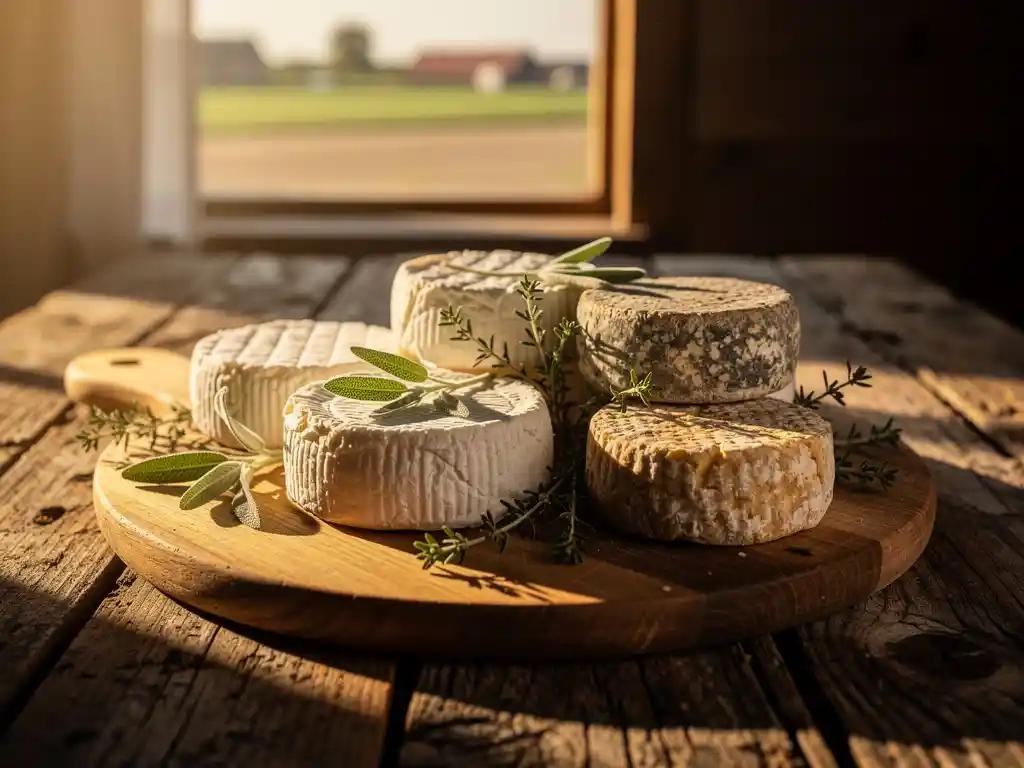
As a European buyer in the food industry, you face important choices when selecting cheese suppliers. Dutch goat cheese producers like us offer specific advantages that directly align with the needs of European customers. From shorter transport distances to flexible production processes – the geographical proximity and expertise of Dutch producers create tangible added value for your business.
What makes Dutch goat cheese unique for European markets?
Dutch goat cheese distinguishes itself through the combination of traditional craftsmanship, strict quality controls, and innovative product development that perfectly aligns with European taste preferences. The mild climate and excellent milk quality from local goat farms form the foundation for cheeses with a characteristic soft, creamy texture and refined flavor.
The Dutch goat cheese sector has developed since the 1990s into a leading industry within Europe. Our producers work closely with local farmers who specialize in goat milk production, with animal welfare and sustainability at the center. This focus results in fresh goat cheese with consistently high quality that meets strict European standards.
What makes Dutch goat cheese further unique is the diversity in the offering. From spreadable goat cheese for retail to aged goat cheese for hospitality and goat cheese slices for industrial processing – Dutch producers have a suitable solution for every application. This specialization in different product forms like goat cheese slices and goat cheese balls makes it possible to respond precisely to specific market segments within Europe.
How do shorter transport distances ensure better product quality?
Shorter transport distances mean that fresh goat cheese can reach European customers within 24-48 hours after production, which significantly improves freshness and quality. This rapid delivery reduces the need for preservatives and ensures that natural flavor and texture are optimally preserved.
For temperature-sensitive products like fresh goat cheese, every extra day in transport is a risk of quality loss. Dutch producers can keep the cold chain short thanks to their central location in Europe. This means fewer temperature fluctuations, less handling, and therefore less chance of damage or quality deterioration. For products with limited shelf life like our fresh goat cheese slice with 23 weeks shelf life, this means that customers have a longer sales period.
The geographical proximity also enables just-in-time deliveries. European customers can place smaller, more frequent orders instead of having to maintain large inventories. This not only reduces storage costs but also guarantees that consumers always get the freshest products. For seasonal products or special campaigns, Dutch producers can quickly respond to changing demand patterns.
What are the cost advantages of a Dutch supplier for European companies?
Dutch suppliers offer lower transport costs, no import tariffs within the EU, and reduced inventory costs through faster deliveries and flexible ordering options. These direct cost savings can amount to 15-20% compared to non-European suppliers.
The absence of customs formalities within the European Union means not only cost savings but also time savings. No import documentation, no delays at borders, and no unexpected tariff changes due to trade conflicts. For companies working with tight production schedules, this eliminates an important source of uncertainty.
Dutch producers can also respond more efficiently to volume fluctuations. With a minimum order quantity of, for example, 1200 pieces for our Alphenaer Specials and a delivery time of 4 weeks, European customers can better manage their cash flow. The ability to invoice in euros eliminates currency risks, which is especially important for long-term contracts. This financial predictability makes it easier to pass on competitive prices to end customers.
What certifications and quality guarantees do Dutch producers offer?
Dutch goat cheese producers work according to strict EU regulations and have certifications such as IFS Food, BRC, and HACCP. These certifications guarantee food safety, traceability, and consistent quality according to the highest European standards.
The Dutch supervision system with the Netherlands Food and Consumer Product Safety Authority (NVWA) is known for its strictness. Producers undergo regular inspections where not only the end product but the entire production process is controlled. For goat cheese, specific requirements apply regarding milk quality, hygiene during production, and temperature control during storage and transport.
Many Dutch producers go beyond the legal minimum requirements. Certifications such as the DGZK quality mark for sustainable goat farming show that animal welfare and environmental impact are also taken seriously. For customers, this means not only a high-quality product but also the assurance that their supplier meets growing consumer expectations regarding sustainability and responsible production. This transparency in the production chain is becoming increasingly important for European retailers and foodservice companies.
How flexibly can Dutch goat cheese producers respond to specific requirements?
Dutch producers offer extensive possibilities for private label production, customized recipes, specific packaging forms, and tailored volumes. This flexibility stems from smaller-scale, agile production processes that can quickly switch between different production runs.
Our experience since 1995 has taught us that every market has its own preferences. For the German market, for example, we produce goat cheese with a slightly firmer texture, while French customers often prefer a creamier variant. We can implement these adjustments without compromising quality or shelf life. Also for specific applications such as pizza toppings, we can precisely adjust the melting behavior and fat content to the wishes of industrial processors.
The possibility of co-creation is an important advantage of Dutch producers. From developing new flavors like our Truffle or Cranberry-Cinnamon variants to adjusting packaging sizes for specific retail concepts – we actively think along with our customers. With Modified Atmosphere Packaging (MAP), we can optimize shelf life for different distribution channels. This flexibility also extends to delivery schedules, where we can vary from weekly to monthly deliveries depending on the need.
What are the main differences between Dutch and non-European goat cheese producers?
Dutch producers distinguish themselves through EU-compliant production standards, direct market access without trade barriers, shorter delivery times, and in-depth knowledge of European consumer preferences. Non-European producers often struggle with import restrictions, longer transport times, and cultural differences in product development.
The regulatory environment forms a fundamental difference. While Dutch producers work according to European standards from day one, non-European producers often have to make adjustments to meet EU import requirements. This can lead to extra costs and complexity. Moreover, trade agreements and tariffs can suddenly change, putting delivery security and price stability under pressure.
Another crucial difference is responsiveness. Dutch producers can respond within days to market changes or quality issues, while communication with overseas suppliers is often slower due to time differences and language barriers. The proximity also makes personal visits and audits easier, which strengthens trust. For fresh products like spreadable goat cheese, the impact of long sea journeys on product quality cannot be underestimated – even with the best cooling, flavor and texture can change during weeks-long transports.
How De Jong Cheese helps with your goat cheese needs
As a family business with more than 30 years of experience, we understand the challenges that European buyers like you face. Our solutions are specifically tailored to ensuring consistent quality, reliable deliveries, and cost efficiency.
What we offer for your business:
- Guaranteed quality: All our goat cheese products are made according to traditional recipes with milk from selected local farms
- Flexible delivery options: From weekly deliveries to customized production schedules for seasonal peaks
- Extensive range: From fresh goat cheese slices to aged specialties and industrial applications
- Private label possibilities: Develop your own goat cheese line with our expertise and production capacity
- Technical support: Advice on melting behavior, fat content, and other specifications for your production lines
Contact us today to discover how our foodservice products perfectly match your needs. Visit our homepage for our complete range or find one of our sales points near you. For a personal conversation about your specific requirements, you can directly contact us. Together we will find the perfect goat cheese solution for your European market.
Veelgestelde vragen
How can I as a buyer ensure quality consistency of Dutch goat cheese across different deliveries?
Dutch producers work with fixed milk suppliers and standardized production processes, ensuring each batch has the same taste and texture. Ask for quality reports per delivery and consider a Service Level Agreement (SLA) specifying parameters like fat content, moisture percentage, and pH value. Many producers also offer the possibility to preserve reference samples for comparison.
What are the minimum order quantities for private label goat cheese products and how long does development take?
Minimum order quantities for private label usually vary between 500-1000 kg per production run, depending on the type of product and packaging. Development time averages 8-12 weeks, including recipe development, trial production, taste testing, and packaging design. For simple adjustments to existing recipes, this can be shortened to 4-6 weeks.
How do I prevent quality loss during storage and distribution of fresh goat cheese?
Maintain a constant temperature between 2-4°C throughout the entire distribution chain and avoid temperature fluctuations during transloading. Use FIFO (First In, First Out) inventory management and never place goat cheese directly next to strongly scented products. Invest in temperature monitoring during transport and train your staff in correct handling of dairy products.
What documentation do I need for importing Dutch goat cheese to other EU countries?
Within the EU no import documentation is required, but you do need a commercial invoice, CMR waybill, and health certificate from the producer. For traceability purposes, a specification sheet with batch number is essential. Some retailers additionally request allergen declarations, nutritional value analyses, and animal welfare certificates.
Can I combine different goat cheese products in one delivery to save transport costs?
Yes, most Dutch producers offer mixed pallets where you can combine different products into a full truck load. Pay attention to compatibility regarding temperature requirements and shelf life – fresh and aged have different optimal storage temperatures. Discuss with your supplier the possibilities for efficient pallet construction and minimum order quantities per product type.
How do I determine the right goat cheese variant for my specific market or customer segment?
Start with a market analysis of local taste preferences and ask your supplier for samples of different textures and aging degrees. Organize taste panels with your target group and analyze sales data of comparable products. Dutch producers can often produce small test batches for market introductions, allowing you to minimize risk before ordering large volumes.
Gerelateerde artikelen
- Hoe reageer je als een leverancier herhaaldelijk niet aan specificaties voldoet?
- Wat zijn de gevolgen van een te hoog vochtgehalte in geitenkaas wrongel?
- Wat betekent zonne-energie in de kaasproductie voor de CO₂-footprint van wrongel?
- Hoe werkt palletlevering van geitenkaas wrongel voor de voedingsindustrie?
- Hoe test je de consistentie van geitenkaas crumbles bij een nieuwe leverancier?