As a buyer in the food industry, you know that scaling up raw materials is a delicate balance between volume, quality and reliability. With goat cheese pucks – those compact discs that are perfect for industrial processing – this challenge becomes extra complex due to the specific properties of this premium dairy product. Whether you’re producing pizzas, ready meals or other food products, successfully scaling up your goat cheese purchasing requires a strategic approach that goes beyond just price negotiations.
What are goat cheese pucks and why are they important for the food industry?
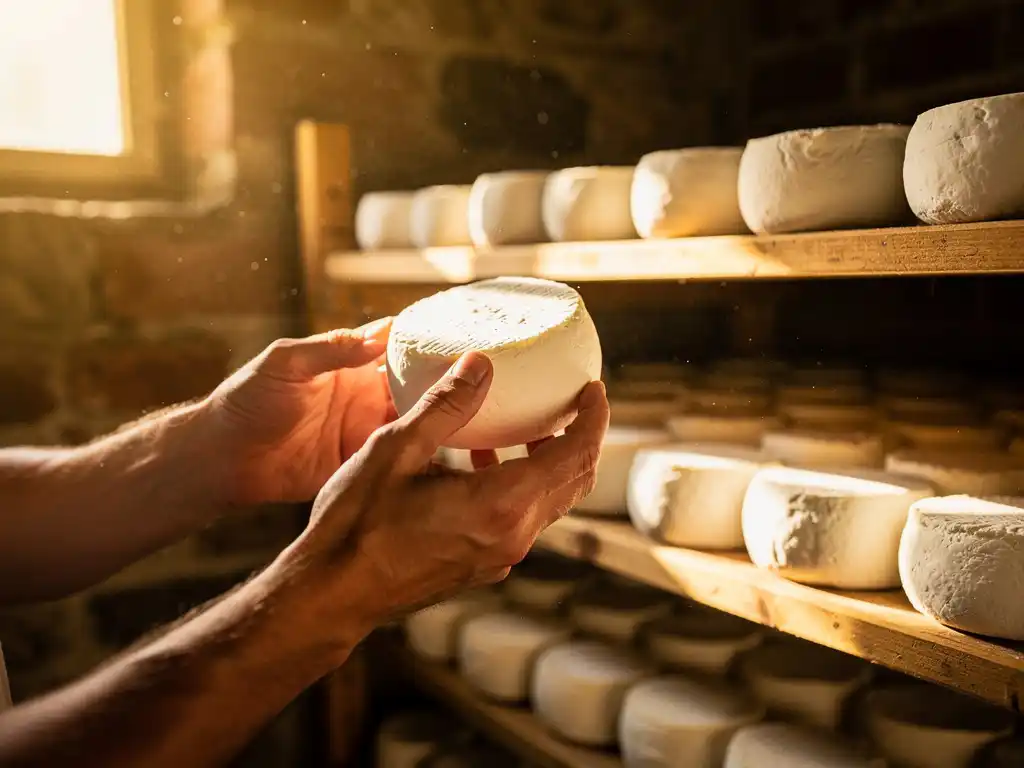
Goat cheese pucks are pre-portioned, round discs of fresh or aged goat cheese, specially developed for industrial processing. These uniform portions of approximately 20-50 grams offer consistent quality, predictable melting behavior and efficient processability in large-scale production processes.
The popularity of goat cheese pucks in the food industry stems from their versatility and premium appeal. Unlike traditional blocks or crumbles, pucks offer precise portion control without waste. This is crucial for producers of pizzas, quiches, salads and ready meals, where consistent product quality is essential.
The unique flavor profile of goat cheese – mild, slightly tangy with a creamy texture – adds a premium element to industrial products. Additionally, goat cheese has technical advantages, such as a lower melting point than cow’s cheese, making it ideal for products that require shorter baking times. The natural white color remains stable during heating, resulting in visually appealing end products.
For the modern food industry, goat cheese pucks also tap into consumer trends. With growing demand for varied flavors and premium ingredients, these pucks offer an efficient way to differentiate product lines without major adjustments to existing production processes.
How do you determine the right quality requirements for goat cheese pucks when scaling up?
The right quality requirements for goat cheese pucks are determined by your specific production process, end product and target audience. Start by establishing technical specifications such as fat content (usually 16-45%), moisture content, pH value, melting behavior and shelf life that align with your processing methods.
Functional properties form the core of your quality requirements. For pizza applications, meltability is crucial – the cheese must melt evenly without oil separation. For cold applications like salads, firmness and sliceability are more important. Test different specifications in small batches before scaling up to find the ideal balance.
Microbiological parameters are non-negotiable when scaling up. Set strict limits for total plate count, yeasts, molds and pathogens. These become more critical as volumes grow, because one contaminated batch has greater consequences. Request certificates demonstrating that the supplier consistently meets these standards.
Sensory consistency is often underestimated but essential for brand experience. Define acceptable ranges for color (white to cream white), texture (soft to semi-hard), taste (mild to tangy) and aroma. With larger volumes, every delivery must fall within these parameters to minimize product variation.
Document all quality requirements in a detailed product specification that serves as a contractual basis. Include tolerances, test methods and frequencies. This prevents discussions afterwards and gives both parties clear expectations during scaling up.
What are the biggest risks when scaling up goat cheese purchasing?
The biggest risks when scaling up goat cheese purchasing are delivery reliability, quality variation, seasonal influences on milk production, price volatility and compliance challenges. These risks can cause production disruptions, cost overruns and reputation damage when not adequately managed.
Delivery reliability becomes more critical with larger volumes. Goat milk production is seasonal with peaks in spring and summer. This means availability fluctuates, especially for fresh goat cheese pucks. A single missed delivery can shut down your entire production line, resulting in costly delays.
Quality variation between batches poses a significant risk. Goat cheese is more sensitive to production variations than cow’s cheese due to smaller-scale milk production and natural variations in milk composition. When scaling up, small quality differences are magnified, which can lead to inconsistent end products.
Price volatility in the goat milk market is substantially higher than with cow’s milk. Fluctuations of 20-30% within a year are not uncommon. With large contract volumes, these price fluctuations can significantly affect your profit margins without adequate pricing agreements.
Compliance complexity increases exponentially when scaling up. Larger volumes mean stricter audits, more extensive documentation requirements and higher fines for non-compliance. Specifically for goat cheese, additional requirements often apply regarding allergen declaration and origin labeling that seem less critical at small volumes.
How do you select the right supplier for large-scale goat cheese puck delivery?
Select a supplier for large-scale goat cheese pucks by evaluating production capacity, quality systems, financial stability, technical expertise and supply chain robustness. Start with suppliers who have demonstrable experience with volumes comparable to your needs and growth potential for future scaling.
Production capacity goes beyond just volume. Research whether the supplier has dedicated production lines for goat cheese pucks, has sufficient milk suppliers in the network and can maintain buffer stocks. Ask about their maximum weekly production and how flexibly they can scale up during sudden demand peaks.
Quality systems must be robust and certified. Minimum requirements are IFS Food or BRC certification, but also look at specific systems for goat cheese such as traceability to individual milk suppliers. Request audit reports from the last two years to identify trends in non-conformities.
Technical support is crucial for successful integration. The ideal supplier offers application expertise, can contribute to product optimization and has a technical team that can respond quickly to questions. Test their responsiveness during the selection process – this predicts their service during the collaboration.
Evaluate total supply chain robustness. Does the supplier have multiple production locations? What are their contingency plans for emergencies? What inventory buffers do they maintain? A supplier with 25+ years of experience in goat cheese production has likely developed more robust systems than new market players.
Which contract agreements are essential when scaling up goat cheese purchasing?
Essential contract agreements for scaling up include volume guarantees with flexibility margins, pricing mechanisms linked to milk prices, quality specifications with penalty clauses, delivery schedules with buffer agreements and exit strategies. These elements protect both parties and create a framework for sustainable collaboration.
Volume commitments must balance between certainty and flexibility. Typically an 80/20 structure works well: commitment to 80% of expected volume with flexibility for 20% more or less. Link this to quarterly reviews to adjust volumes based on actual consumption. Include clauses for phased scaling over 6-12 months.
Pricing agreements for goat cheese require sophistication given the volatility. Consider a base price with monthly adjustments linked to a goat milk price index. Build in maximum fluctuations (for example +/- 15%) with renegotiation if exceeded. For fresh goat cheese pucks, shorter pricing periods (3 months) are common than for aged variants.
Quality guarantees must be specific and measurable. Define not only the specifications but also test frequencies, sampling and consequences of deviations. Include a system of warnings before contractual penalties. Also specify positive quality incentives such as bonuses for consistent top quality.
Securing delivery reliability goes beyond just dates and quantities. Include buffer stock agreements where the supplier maintains strategic inventories. Define force majeure clauses specific to the dairy sector (animal diseases, milk quotas). Also arrange priority during shortages – do you get preference over other customers during shortages?
How do you monitor quality effectively with larger volumes of goat cheese pucks?
Effective quality monitoring with large volumes of goat cheese pucks requires a systematic approach with incoming controls, statistical sampling, trend analyses and real-time tracking systems. Implement a risk-based control system where critical parameters are tested more frequently than stable properties.
Incoming control must be efficient but thorough. With daily deliveries of pallets of goat cheese pucks, 100% inspection is unfeasible. Use statistically sound sampling plans (for example ANSI/ASQ Z1.4) where sample size depends on batch size and historical performance. Always test temperature, appearance and packaging integrity upon receipt.
Laboratory testing must be prioritized on critical parameters. For goat cheese pucks these are typically: microbiology (weekly per batch), fat content and moisture (daily composite sample), pH and acidity (per delivery) and melting behavior (weekly). Build a database to identify trends before problems escalate.
Sensory evaluation remains crucial despite large volumes. Train an internal panel to assess daily samples for taste, texture and appearance. Document deviations systematically and link these back to production data from the supplier. Patterns in sensory deviations often predict technical problems.
Digital monitoring tools make the difference when scaling up. Implement a quality management system that automatically generates alarms for deviations, visualizes trends and generates reports for supplier evaluations. Link this to blockchain or comparable technology for complete traceability from milk to end product.
How DeJong Cheese helps with scaling up goat cheese puck purchasing
We understand the complexity of industrial scaling. With our 30 years of experience in goat cheese production and proven track record in large-scale deliveries to the food industry worldwide, we offer the stability and expertise needed for successful scaling.
Our scaling solutions include:
- Flexible production capacity: Dedicated production lines for fresh goat cheese with capability up to 15 tons per week
- Technical support: Our team helps with product optimization, melting behavior analyses and application testing in your production facility
- Robust quality systems: IFS Food certified with complete traceability to individual milk suppliers
- Inventory management: Strategic buffer stocks and Modified Atmosphere Packaging for extended shelf life
- Custom solutions: From customized fat contents (16-45%) to specific sizes and packaging
We combine our traditional recipes with modern production techniques to guarantee consistent quality, even at large volumes. Whether you’re looking for fresh goat cheese pucks for pizza applications or aged variants for premium ready meals, we deliver the reliability that industrial processing requires.
Ready to scale up your goat cheese purchasing without quality compromises? Contact us for a no-obligation discussion about your specific requirements. Visit our foodservice page for more information about our complete industrial range, or find one of our sales points to taste our products first. Discover on our homepage why leading food producers have trusted DeJong Cheese for 30 years.
Veelgestelde vragen
How far in advance should I place my orders when scaling up to industrial volumes?
For industrial volumes of goat cheese pucks, an order horizon of 4-6 weeks is common, especially during peak season (March-August). For volumes above 5 tons per week, we recommend rolling forecasts of 3 months with weekly fine-tuning. This gives suppliers time to plan milk purchasing and reserve production capacity, while you maintain flexibility for last-minute adjustments.
What are typical minimum order quantities (MOQ) for industrial goat cheese pucks?
MOQs vary per supplier but usually start at 500-1000 kg per order for standard specifications. For custom formulations (specific fat content, size or herbs), MOQs are often higher around 2000-3000 kg. Many suppliers offer tiered pricing where significantly better conditions apply from 5000 kg per week with fixed purchase commitments.
How do I prevent quality loss during transport and storage of large volumes of goat cheese pucks?
Critical are controlled temperature (2-4°C), Modified Atmosphere Packaging (MAP) with 30% CO2/70% N2, and maximum stacking height of 8 boxes. Invest in real-time temperature loggers per pallet and demand GDP-certified transport. For buffer stocks, separate cold rooms with 85% humidity are essential to prevent dehydration, especially for fresh goat cheese pucks.
Which technological innovations make scaling of goat cheese pucks more efficient?
Inline quality control with NIR spectroscopy for real-time fat and moisture analysis, blockchain for milk traceability, and predictive analytics for demand forecasting make scaling more efficient. Also, robotization of packaging lines and AI-driven visual inspection significantly reduce labor costs and increase consistency at large volumes.
What are realistic cost price reductions when scaling up goat cheese puck purchasing?
When scaling from 1 to 5 tons per week, price reductions of 8-12% are realistic through more efficient production and logistics. Above 10 tons per week, discounts can reach 15-18%, depending on contract duration and payment conditions. Note: goat cheese has a price floor due to goat milk scarcity, so don’t expect discounts like with commodity cheeses.
How do I manage seasonal influences on availability with year-round production?
Combine long-term contracts with price leveling throughout the year, strategic frozen stocks during peak production (May-July), and develop alternative recipes with aged goat cheese for winter months. Also consider geographical spread with suppliers from southern Europe where seasonal influences are less extreme, or blends with sheep cheese during shortages.
Gerelateerde artikelen
- Hoe blijf je op de hoogte van wijzigingen in voedselveiligheidswetgeving?
- Hoe stel je een leveranciersbeoordelingsformulier op voor geitenkaas?
- Hoe beoordeel je of een leverancier voldoende R&D-capaciteit heeft?
- Welke certificeringen moet een kaasleverancier hebben voor industriële toepassing?
- What is the fastest way to qualify an industrial rennet supplier?