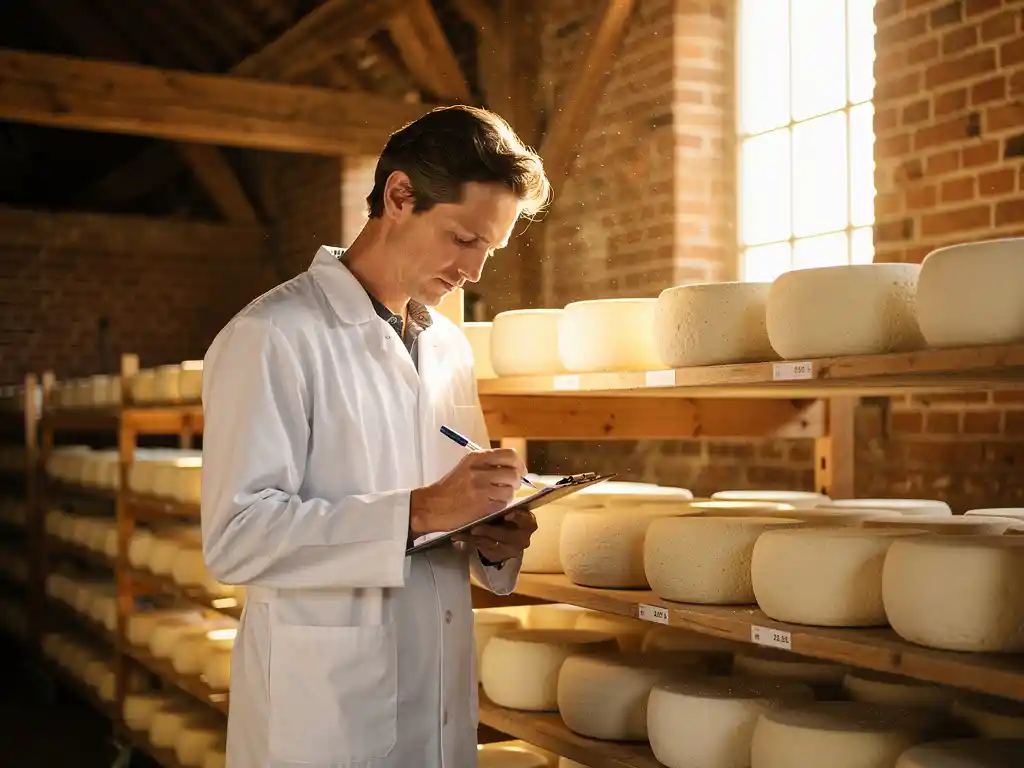
As a buyer in the food industry, you know how crucial reliable suppliers are for your production process. A factory audit at a cheese producer provides insight into the quality, safety, and consistency of your future supplier. For companies working with goat cheese specialties such as fresh goat cheese, aged goat cheese, or spreadable goat cheese, a thorough audit forms the foundation for successful collaboration. This article gives you as a buyer concrete tools to interpret audit results and make informed decisions.
What exactly is a factory audit at a cheese producer?
A factory audit at a cheese producer is a systematic inspection of production facilities, processes, and quality systems to verify that they meet established standards for food safety, hygiene, and product quality. The audit evaluates everything from raw material receipt to final product delivery.
For cheese producers, a factory audit includes specific focus points that are unique to the dairy industry. The audit examines the origin and quality of milk, the pasteurization process, aging conditions, and product traceability. For specialties like goat cheese slices or goat cheese balls, extra attention is paid to specific production processes and allergen control.
An audit can take various forms. Certification audits are conducted by independent bodies for standards such as IFS Food or BRC. Supplier audits are carried out by you as a buyer yourself or commissioned to a specialized agency. Internal audits are used by the producer for continuous improvement of their own processes.
The audit process not only documents the current situation but also identifies improvement points and risks. For you as a buyer, this provides valuable information about supplier reliability and consistency of products like fresh goat cheese or aged goat cheese that you want to purchase.
Which certifications should a reliable cheese producer have?
A reliable cheese producer must have at least HACCP certification as the foundation for food safety, supplemented with a recognized GFSI standard such as IFS Food, BRC, or FSSC 22000 for deliveries to retail and industry. Additional certifications are often required for export.
The most important certification for cheese producers in Europe is IFS Food (International Featured Standards). This standard sets strict requirements for production processes, hygiene, traceability, and management. For producers of goat cheese specialties like goat cheese slices, IFS Food is often a basic requirement from major retailers and industrial customers.
Besides IFS Food, there are specific certifications that may be relevant depending on your market segment:
- BRC Global Standards – especially important for deliveries to British retailers
- ISO 22000 – internationally recognized standard for food safety management systems
- Organic certificate – essential for organic cheese products
- Halal or Kosher certification – for specific market segments
- DGZK quality mark – specific for Dutch goat cheese producers
For industrial processing of products like spreadable goat cheese or fresh goat cheese for pizza applications, additional technical specifications and certifications may be required. Consider certificates for Modified Atmosphere Packaging (MAP) or specific hygiene standards for products with extended shelf life.
When evaluating certifications, look not only at their possession but also at validity, scope, and any non-conformities from recent audits. A producer who is transparent about audit results and actively works on continuous improvement shows reliability.
How does a factory audit proceed step by step?
A factory audit at a cheese producer follows a structured process that begins with planning and document review, followed by a physical inspection of facilities and processes, and ends with reporting and follow-up of findings. The complete audit process usually takes one to three days.
Preparation starts weeks before the actual audit. As a buyer, you establish the audit agenda together with the auditor, determine the scope, and request relevant documents such as process diagrams, HACCP plans, and previous audit reports. For producers of specialties like aged goat cheese or goat cheese balls, you request specific information about aging processes and quality controls.
The step-by-step plan of the audit itself looks as follows:
- Opening meeting: Introduction, confirmation of scope and planning of the day
- Document review: Check of procedures, certificates, training registrations, and quality records
- Raw material receipt tour: Inspection of milk receipt, storage, and incoming controls
- Production inspection: Observation of the cheesemaking process, hygiene, temperature control
- Packaging and storage: Check of packaging rooms, labeling, and storage conditions
- Laboratory: Assessment of testing facilities and analysis methods
- Employee interviews: Verification of knowledge about procedures and food safety
- Closing meeting: Discussion of findings and follow-up actions
After the audit, you receive a detailed report with findings, categorization of deviations (major/minor), and recommendations within a few days to weeks. The producer gets time to develop an action plan for resolving identified deviations. As a buyer, you assess this plan and determine whether a follow-up audit is needed before proceeding with business.
What are the key focus points during a cheese production audit?
The key focus points during a cheese production audit are microbiological control, temperature management during all process steps, hygiene of personnel and equipment, traceability from raw materials to final product, and validation of critical control points such as pasteurization.
For the production of fresh goat cheese and goat cheese slices, microbiological control is crucial. Auditors check the effectiveness of pasteurization, hygiene during coagulation and cutting of curd, and control of pathogens such as Listeria monocytogenes. Special attention is given to separation between raw milk and pasteurized product zones.
Specific control points for cheese production include:
- Milk quality and receipt: Control of antibiotics, cell count, bacterial count, and temperature upon arrival
- Starter culture management: Storage, activity, and dosing of starter cultures
- Brine baths: Salt concentration, pH, microbiological quality, and renewal frequency
- Aging conditions: Temperature, humidity, and ventilation in aging rooms
- Allergen control: Separation of cow milk and goat milk products
- Cleaning and disinfection: Validation of CIP systems and swab results
For industrial applications such as spreadable goat cheese or products for the pizza industry, additional focus points apply. The audit checks specifications for functionality (melting behavior, freeze stability), consistency between batches, and suitability of packaging for industrial processing.
A professional auditor also pays attention to less obvious aspects such as the company culture around quality, response time to deviations, and effectiveness of complaint management. These soft factors are often good indicators of a supplier’s long-term reliability.
How do you interpret audit results as a buyer?
As a buyer, you interpret audit results by focusing on the severity and frequency of deviations, the supplier’s response to findings, trends across multiple audits, and the impact of identified issues on your specific product requirements and risk profile.
Audit reports typically contain three categories of findings. Major non-conformities indicate serious shortcomings that directly threaten food safety, such as failing pasteurization or missing allergen labels on aged goat cheese. These require immediate action. Minor non-conformities are less critical but must be resolved within an agreed timeframe. Observations are improvement points without direct impact on product safety.
For proper interpretation, you look at:
- Number and type of deviations: A single major can be more serious than ten minors
- Location of deviations: Issues in critical processes like pasteurization weigh heavier
- Recurring patterns: Repeated problems indicate systemic shortcomings
- Corrective actions: Speed and effectiveness of proposed solutions
- Management involvement: Management commitment to solving problems
Translate the findings to your specific situation. A fresh goat cheese producer with minor deviations in the aging room may still be an excellent supplier for fresh products. For goat cheese slices with long shelf life, perfect hygiene conditions are crucial.
Use historical data to identify trends. A supplier who consistently improves and openly communicates about challenges is often more reliable than one with a perfect report but without transparency. Weigh audit results against other factors such as delivery reliability, product quality, and commercial terms for a complete supplier assessment.
When should you as a buyer have your own audit conducted?
As a buyer, you should have your own audit conducted for new suppliers of critical ingredients, after significant quality incidents, when expanding to new product categories, when certification audits are older than 12 months, or when your risk analysis requires it.
The timing of a supplier audit depends on various factors. For new suppliers of strategic products like goat cheese balls for your ready-to-eat line, an audit before contract signing is essential. For existing suppliers, certain events trigger the need for an audit: structural quality problems, changes in production processes, new legislation, or change of ownership.
Situations that justify your own audit:
- New supplier: Especially for private label spreadable goat cheese or other brand-sensitive products
- Critical ingredients: Products with high risk profile or large volumes
- Quality incidents: After recalls, complaints, or rejections
- Process changes: New production lines, recipe adjustments, or different location
- Long relationships without recent audit: At least every 2-3 years for important suppliers
- Specific market requirements: Export to countries with strict import requirements
The investment in your own audit pays off especially when standard certification audits don’t fully cover your specific requirements. For industrial applications of fresh goat cheese with specific functionality requirements, your own audit checks whether the producer can deliver these consistently. Also for suppliers who only have basic certification but deliver large volumes, your own audit provides extra assurance.
Plan audits strategically in your purchasing process. An audit just before contract renewal provides negotiation room. For seasonal products, you plan the audit during peak production for a realistic picture. Consider joint audits with other customers to share costs and increase impact at the supplier.
How De Jong Cheese helps with factory audits
As a family business with almost 30 years of experience in cheese production, we welcome audits as an opportunity to demonstrate our quality and reliability. Our modern production facility in Alphen is fully equipped according to the latest food safety standards and specially designed for the production of high-quality goat cheese specialties.
Our approach to factory audits is characterized by:
- Complete transparency: Open access to all production areas, documents, and employees
- IFS Food certification: Annually audited according to the highest standards
- Dedicated quality team: Experienced professionals who guide your auditors professionally
- Extensive documentation: Complete traceability from milk receipt to delivery
- Continuous improvement: Proactive approach to improvement points from audits
- Flexible planning: Audits possible at times that work best for you
For buyers considering working with us for fresh goat cheese, aged varieties, or industrial applications such as our pizza range, we offer a tour of our facilities prior to an audit. This gives you an immediate picture of our working methods and quality standards.
Would you like to know more about our certifications, audit results, or plan a visit to our production location? Contact us through our contact page or view our complete range on our website. For foodservice professionals, we have a special product page with all relevant specifications. Are you looking for our products in retail? Check out our points of sale.
Veelgestelde vragen
How can I as a buyer best prepare for a factory audit at a cheese producer?
Start by creating a checklist with your specific product requirements and critical control points. Request recent certificates, analysis reports, and complaint registrations in advance. Involve your quality department in determining audit questions and contact the supplier to arrange practical matters such as access to all departments and availability of key personnel.
What are typical red flags during a cheese production audit that I should be alert to?
Watch for inconsistent temperature recordings, missing or expired calibration certificates of measuring equipment, poor separation between raw and pasteurized zones, and employees who cannot explain procedures. Also, reluctance to show certain areas, missing trend analyses of microbiological results, or messy administration are warning signals.
How much does a professional factory audit cost on average and when is this investment worthwhile?
A one-day audit by a certified audit bureau costs between €1,500 and €3,000 excluding travel costs. The investment is justified for annual purchasing volumes above €250,000, new suppliers for private label products, or when your company wants to minimize liability risks. Consider cost sharing with other customers or a phased approach where you first conduct a pre-audit yourself.
What specific questions should I ask during an audit for industrial cheese applications?
Focus on functional properties: ask for validation data on melting behavior, freeze stability, and shelf life under different conditions. Check whether batch-to-batch consistency tests are performed, how deviating functional specifications are detected, and whether the producer has experience with your specific application. Also ask about flexibility for recipe adjustments and minimum order quantities.
How often should I plan a follow-up audit after identified deviations?
For major non-conformities, plan a follow-up audit within 3-6 months to verify corrective actions. For minor deviations, a document review of evidence for implementation often suffices. Plan annual audits for strategic suppliers and biennial checks for stable suppliers with good track records. For new product developments or significant process changes, an extra audit is always advisable.
Can I rely on certification audits alone or should I always conduct my own inspection?
Certification audits such as IFS Food provide a good foundation but don’t always cover your specific requirements. Rely on certificates for standard products with low risks and volumes under €100,000 per year. For strategic partnerships, private label, or products with specific functionality requirements, your own audit provides deeper insight into the match between supplier capabilities and your needs.
What do I do if a supplier refuses to cooperate with certain parts of the audit?
Refusals are a serious signal that requires further investigation. First ask for the reason – sometimes there are legitimate reasons such as trade secrets or safety protocols. Offer alternatives such as confidentiality agreements or adapted audit procedures. If the supplier continues to refuse without valid reason, seriously consider whether this is the right partner, especially for critical ingredients where complete transparency is essential.
Gerelateerde artikelen
- Welke laboratoriumtesten zijn relevant om kwaliteit van geitenkaas te verifiëren?
- Hoe plan je rond seizoensgebonden beschikbaarheid van geitenmelk?
- Hoe voorkom je budgetoverschrijdingen door onvoorspelbare grondstofprijzen?
- Wat zijn de trends in geitenkaasgebruik op pizza's in de Europese voedingsindustrie?
- Wat is de houdbaarheid van geitenkaas crumbles na het ontdooien?