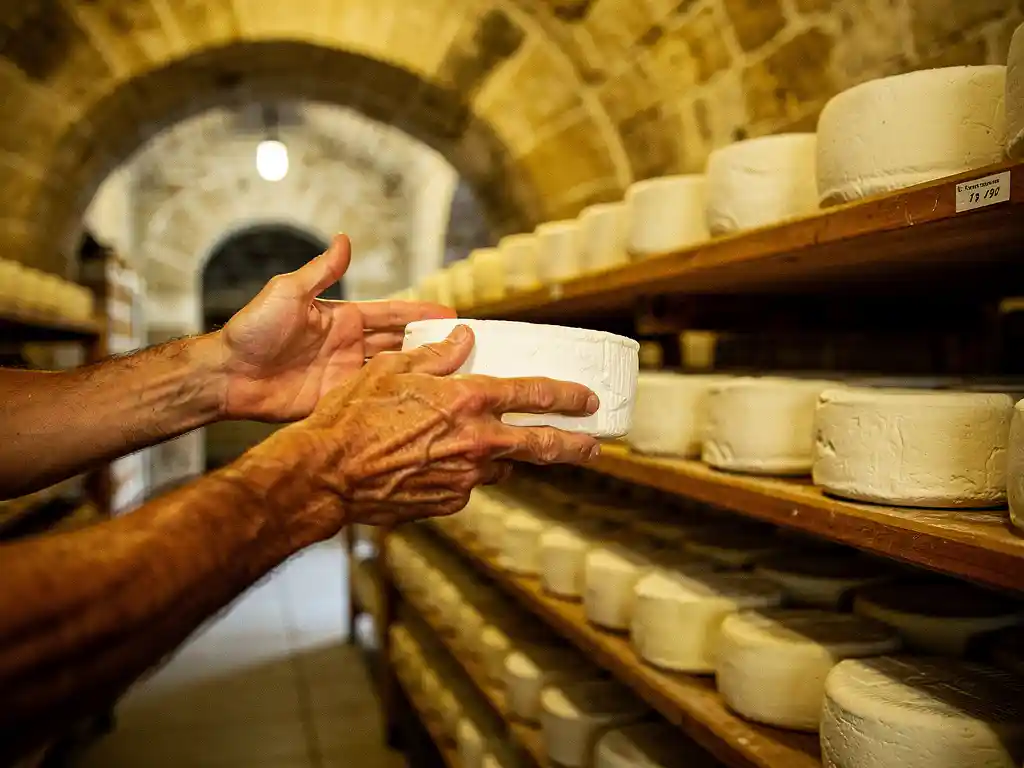
Finding the right supplier for industrial goat cheese can be a time-consuming process, especially when you have specific technical requirements, such as high-melt properties for heating processes. As a buyer in the food industry, you know that choosing the right partner is crucial for consistent product quality and reliable deliveries. In this article, we’ll walk through step by step how to efficiently identify and evaluate the ideal supplier of high-melt goat cheese.
What is high-melt goat cheese and why is this important for the food industry?
High-melt goat cheese is specially developed cheese with a higher melting point than regular goat cheese, allowing it to retain its structure when heated instead of becoming completely liquid. This property is essential for industrial applications such as pizzas, ready meals, and hot snacks where the cheese must remain visible and recognizable.
The technical specifications of high-melt goat cheese make the difference between a product that loses its shape during the baking process and a product that retains attractive cheese cubes or slices. For frozen pizza manufacturers, for example, this means that the goat cheese is still visible as recognizable pieces after baking, which enhances the premium appearance of the final product.
The melting behavior is determined by the protein structure and fat content of the cheese. In high-melt variants, the calcium balance is adjusted so that the proteins remain more strongly bonded together during heating. This results in a cheese that becomes softer but does not completely melt, ideal for applications where texture and presentation are important.
For the food industry, high-melt goat cheese also offers process advantages. The cheese retains its position on the product during transport and handling in the production line, which means less waste and a more efficient production process. Additionally, the stable structure ensures a more consistent end result, which is important for quality control and consumer experience.
Which specifications should you check with a supplier of industrial goat cheese?
For industrial goat cheese, the most important specifications are fat content, moisture percentage, pH value, melting point, shelf life, and microbiological values. These parameters directly determine how the cheese behaves in your production process and final product, with consistency between batches being crucial for predictable results.
Fat content affects not only melting behavior but also the taste and mouthfeel of the cheese. For high-melt applications, the ideal fat content is often between 20-25% in dry matter, but this can vary depending on your specific application. The moisture percentage partly determines the firmness and processability of the cheese during cutting or grating in your production line.
The pH value is a critical factor for both shelf life and functionality. A pH between 5.2 and 5.6 is typical for goat cheese, but for specific applications, an adjusted pH may be necessary. Ask your supplier about their capabilities to adjust pH values and how they keep these consistent between production batches.
Microbiological specifications deserve extra attention, especially when your final product is not fully heated. Check if the supplier works according to IFS Food or comparable certifications and ask about their testing protocols for pathogens such as Listeria monocytogenes, Salmonella, and E. coli. A reliable supplier can provide detailed microbiological reports per batch.
Don’t forget to ask about packaging options and logistical specifications. Industrial volumes require efficient packaging that fits your production line, such as blocks of specific dimensions or pre-portioned slices. The shelf life under different storage conditions and stability during transport are also essential factors for your supply chain planning.
How do you evaluate the reliability of a goat cheese supplier?
You evaluate the reliability of a goat cheese supplier by examining their delivery history, certifications, production capacity, and quality systems. Ask for references from similar industrial customers and check their track record for consistent deliveries and quality over at least two years.
Start by verifying essential certifications such as IFS Food, BRC, or FSSC 22000. These certifications guarantee that the supplier works according to international food safety standards and has implemented robust quality systems. Don’t just ask for certificates, but also for their latest audit report and any improvement points that emerged from it.
Production capacity and flexibility are crucial for long-term partnerships. A reliable supplier must not only be able to handle your current volumes but also grow with your business. Ask about their maximum production capacity, lead times for large orders, and their ability to handle demand peaks without quality loss.
Test the supplier’s responsiveness by paying attention to how quickly and completely they respond to technical questions and sample requests. A professional supplier has technical specialists available who can answer your specific questions and think along about optimizations for your application. Their willingness to discuss customization and provide samples for extensive testing is a good indicator of customer focus.
Financial stability should not be overlooked. A supplier that has existed for decades and is established in the market offers more certainty for continuity. Ask about their company history, ownership structure, and investments in production capacity. Family businesses with a long tradition in cheese production often combine stability with personal commitment to quality.
What are the differences between traditional and modern goat cheese producers?
Traditional goat cheese producers work according to artisanal recipes with natural aging processes and small-scale production, while modern producers use automated processes with standardized techniques for large volumes. Both have their place in the industry, depending on your specific needs for consistency, volume, and product characteristics.
Traditional producers often excel in flavor depth and authentic texture through their use of natural rennet, slow acidification, and traditional aging methods. Their production processes are often passed down through generations and result in unique flavor profiles. For premium applications where authentic goat cheese flavor is central, these producers can add value despite possibly higher costs.
Modern producers, on the other hand, offer advantages in consistency, scalability, and technical adaptability. They use advanced process control to reproduce exactly the same specifications in every batch. For industrial processors who maintain strict tolerances for pH, moisture, and melting behavior, this predictability offers important process advantages.
The ideal supplier often combines the best of both worlds: traditional knowledge of cheesemaking with modern quality control and production capacity. Look for producers who have retained their artisanal roots but have invested in modern technology for consistency and food safety. This balance results in high-quality products that are both authentic and reliable for industrial application.
Also consider flexibility in product customization when making your choice. Modern producers often have more possibilities for customization of technical specifications, while traditional producers can excel in developing unique flavor profiles. Your choice depends on what is most important for your specific application: technical precision or authentic flavor experience.
How do you test goat cheese samples for industrial application?
Test goat cheese samples by subjecting them to your exact production process, including heating, cooling, and shelf life under realistic conditions. Document melting behavior, texture change, color stability, and flavor retention over at least three production batches to draw reliable conclusions.
Start with laboratory tests to establish baseline specifications. Measure the exact melting point, oil separation during heating, and texture change at different temperatures. For pizza applications, for example, you test the cheese at 220-250°C for 5-8 minutes. Document how the cheese behaves: does it retain shape, is oil separated, does browning occur?
Then conduct practical tests in your production line. Process the samples exactly as you do with your current cheese: cutting, grating, or dicing. Pay attention to processability, sticking to equipment, and consistency of pieces. Test different batches at different times in the shelf life period to see how functionality changes over time.
Shelf life tests are crucial for industrial applications. Store your final product with the tested goat cheese under normal distribution conditions and evaluate regularly. Pay specific attention to:
- Color stability after freezing and thawing
- Texture change during the shelf life period
- Microbiological stability
- Flavor evolution and possible off-flavors
- Interaction with other ingredients in your product
Organize taste panels with both trained tasters and representatives of your target group. Compare the new goat cheese with your current product on taste, texture, and general acceptance. Document all findings systematically and share these with your potential supplier for possible adjustments.
Which questions do you ask during the first conversation with a potential supplier?
During the first conversation, you focus on production capacity, delivery reliability, technical possibilities for customization, certifications, and references from similar industrial customers. Ask specifically about their experience with high-melt applications, minimum order quantities, lead times, and their flexibility with volume fluctuations.
Start with concrete questions about their production process and capacity:
- What is your maximum production capacity per week for industrial goat cheese?
- Can you guarantee consistent quality at volumes of X tons per month?
- What are the standard lead times and how flexible are these for rush orders?
- Do you have backup production capacity for technical failures?
- How do you handle seasonal fluctuations in milk supply?
Technical specifications and customization possibilities deserve extensive attention. Ask about their experience with adjusting melting points, pH values, and texture for specific applications. An experienced supplier can give concrete examples of successful customization projects and the technical limits of what is possible within their production process.
Quality assurance and traceability are essential for industrial suppliers. Ask about their quality system, frequency of internal and external audits, and their procedure for quality deviations. Specifically for goat cheese, the traceability of milk suppliers is important. How do they select and control their milk suppliers? What guarantees can they give about the consistency of milk quality?
Also discuss practical matters such as packaging options, palletizing, and transport possibilities. Can they deliver in the packaging units that fit your production line? What are the possibilities for special packaging such as Modified Atmosphere Packaging? Do they have experience with just-in-time deliveries and can they connect to your inventory management system?
Don’t forget to ask about their vision on long-term partnerships. How do they see the collaboration developing? Are they willing to invest in product development specifically for your applications? What support do they offer for product development and troubleshooting? A supplier who thinks along and invests in the relationship is valuable for your long-term success.
How DeJong Cheese helps with finding the right high-melt goat cheese
At DeJong Cheese, we understand the challenges of buyers in the food industry. With our tradition since 1995 and specialization in goat cheese, we offer not only high-quality products but also the technical expertise and flexibility you seek. Our team of specialists is happy to help you find the perfect goat cheese solution for your specific application.
Our approach for industrial customers is characterized by:
- Technical expertise: Our product specialists advise on melting behavior, pH adjustments, and texture optimization
- Flexible production: Customization possibilities for volume, specifications, and packaging
- Reliable delivery: Consistent quality and delivery reliability thanks to our experienced production
- Extensive certification: IFS Food certified for your peace of mind
- Sample service: Extensive testing possibilities with guidance from our technical specialists
We invite you to discover our range of fresh and aged goat cheeses, specifically developed for industrial processing. From high-melt variants for pizza applications to specific textures for ready meals – we are happy to think along with you about the best solution.
Are you ready to shorten your search process for the ideal goat cheese supplier? Contact us for a no-obligation conversation about your specific needs. Visit our foodservice page for more information about our industrial range, or discover where you can find our products through our sales points. On our homepage you will find all information about our complete range and our artisanal approach.
Veelgestelde vragen
How long does it take on average to fully implement a new supplier of industrial goat cheese in our production line?
A complete implementation takes an average of 3-6 months, depending on the complexity of your production process. This includes the initial testing phase (4-6 weeks), production trials (6-8 weeks), final specification alignment (2-4 weeks), and setting up logistical processes. Plan extra time for seasonal products where you want to test different production conditions.
What are the main cost factors when switching to a new goat cheese supplier that I should include in my business case?
In addition to the product price, you should account for costs for production tests ($5,000-15,000), possible adjustments to recipes, recertification of final products, and initial inventory costs due to parallel stocks during the transition. Don’t forget the internal hours for project management and quality control. Ask suppliers about their support for these transition costs, some offer free technical guidance or test materials.
How do I prevent production loss while testing new high-melt goat cheese samples?
Start with small laboratory tests outside your regular production. Then plan test productions at the end of a production run or during planned maintenance moments. Use a phased approach: first 100kg test batch, then 500kg, then a full production run. Document exactly which machine settings work, so that operators can immediately set the right parameters during the final switch.
What backup strategy should I maintain when working with one main supplier for goat cheese?
Always develop a second supplier who can take over at least 30% of your volume in case of emergencies. Maintain a strategic inventory of 2-4 weeks, depending on your production rhythm. Make concrete agreements about emergency deliveries and test these procedures annually. Also consider functionally comparable alternatives (such as cow’s milk cheese with similar properties) for absolute emergency situations, but test these in advance for consumer acceptance.
How do I deal with seasonal fluctuations in goat milk production when concluding annual contracts?
Discuss with suppliers their strategies for the spring peak season (March-June) when milk production is high versus the winter months with lower availability. Professional suppliers freeze cheese during peak production or work with strategic inventories. Ask about seasonally dependent pricing models and consider flexible contracts with volume bandwidths of +/- 20% to absorb natural fluctuations without contract breach.
What are the biggest pitfalls when switching goat cheese suppliers that I should avoid?
The biggest pitfalls are: switching too quickly without extensive shelf life tests, underestimating consumer reactions to flavor changes, no attention to seasonal influences on cheese quality, and insufficient communication with your production team about handling differences. Also avoid signing long-term contracts without exit clauses or volume flexibility, and don’t forget to update your labeling if specifications change significantly.
How can I optimally utilize the technical support of a goat cheese supplier for product development?
Involve the technical specialists of your supplier from the concept phase of new products. Share your complete recipe and process parameters (under NDA) so they can provide targeted advice. Ask for joint innovation sessions where their cheese experts and your R&D team work together. Many suppliers have test kitchens where you can develop new applications together. Make concrete agreements about intellectual property and exclusivity of developed solutions.
Gerelateerde artikelen
- Hoe plan je rond seizoensgebonden beschikbaarheid van geitenmelk?
- Hoe gebruik je geitenkaas spread als ingrediënt in industriële sauzen en dressings?
- How do you create an efficient shortlist of goat cheese producers for the food industry?
- Welke Europese wetgeving geldt voor geitenkaas in de voedingsindustrie?
- Zit er stremsel in geitenkaas?