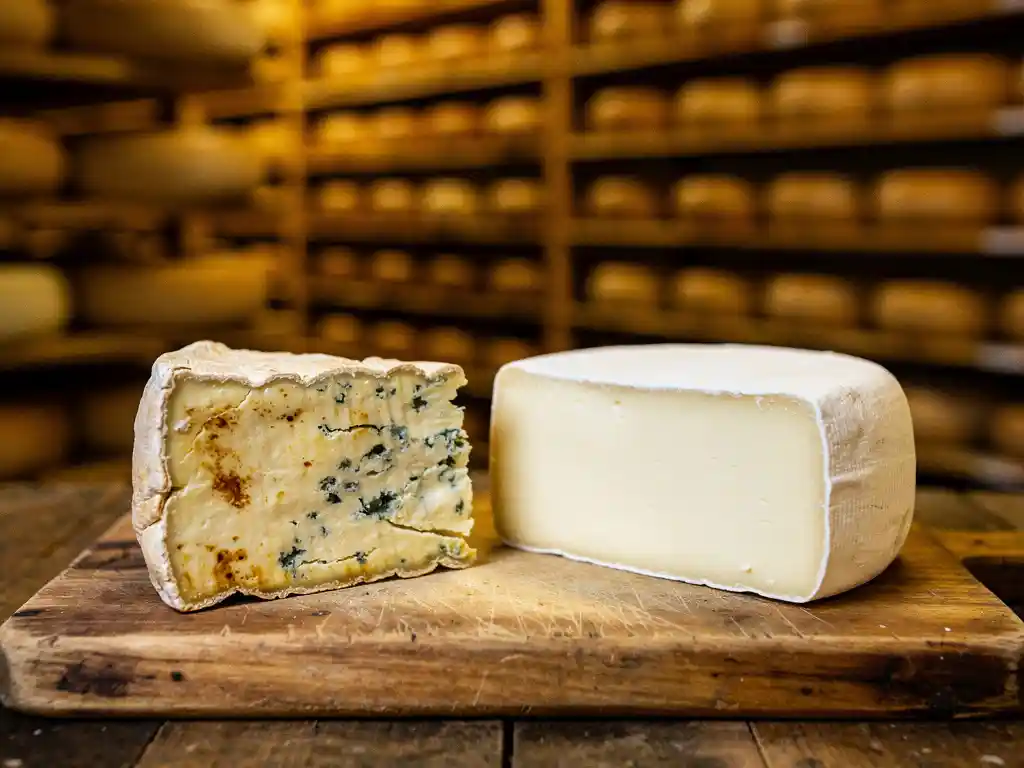
Working with an unknown producer of industrial cheese products can be tempting due to potentially lower prices or faster delivery times. But as a buyer in the food industry, you know that a wrong choice can have major consequences for your production line, product quality, and ultimately your business results. The risks extend beyond just a failed batch – they can disrupt your entire production process and damage your reputation with end customers.
What are the biggest risks when choosing an unknown cheese producer?
The biggest risks with unknown cheese producers are inconsistent product quality, unreliable deliveries, missing certifications, inadequate technical support, and hidden costs that only become apparent later. These risks can lead to production downtime, quality complaints, and financial losses.
Inconsistent quality poses the most direct risk. Where established producers have years of experience delivering consistent specifications, new suppliers may struggle to maintain uniformity. This means fat content, moisture percentage, or melting behavior can vary from batch to batch. For industrial applications like pizzas or ready meals, these variations are disastrous – they disrupt recipes, affect end quality, and can even lead to product rejection.
Delivery reliability is a second critical risk. Unknown producers often haven’t yet established robust logistical processes. This results in missed deadlines, incomplete deliveries, or sudden delivery stops when their production capacity comes under pressure. For your production line, this means potential downtime and loss of revenue.
The absence of proper certifications poses a compliance risk you cannot ignore. Without IFS Food certification, HACCP systems, or other food safety certificates, you risk fines, recalls, and even business closure. Additionally, missing certificates like Halal or Kosher can limit your market opportunities.
How do you recognize quality problems with industrial cheese products?
You recognize quality problems with industrial cheese products by varying texture, deviating color, inconsistent melting behavior, varying pH values, and irregular shelf life. These signals indicate inadequate process control and can have major consequences for your end product.
Texture variations are often the first noticeable sign. When curds or cheese crumbles are firm one time and crumbly the next, this indicates inconsistent production processes. For applications where pumping or dosing is essential, such as fillings for snacks or sushi, these variations make automated processing impossible.
Color deviations signal problems with milk quality or the ripening process. A goat cheese that is bright white one week and yellowish the next indicates varying feed quality for the goats or inconsistent storage conditions. This affects not only the appearance of your end product but often the taste as well.
Melting behavior is crucial for processing cheeses. When cheese for pizza applications melts perfectly one moment and becomes lumpy or separates oil the next delivery, this disrupts your entire production process. This problem often arises from variations in the production process, particularly in curd preparation and salting.
- Perform a visual inspection of color and texture with every delivery
- Test melting behavior with a standard heating test
- Measure pH values to detect acidity variations
- Check expiration dates and store reference samples
- Document all deviations for trend analysis
What are the consequences of varying product quality for your production line?
Varying product quality leads to production downtime, increased waste, recipe adjustments, end customer complaints, and additional costs for quality control. These consequences can amount to tens of thousands of dollars per incident and damage your reputation long-term.
Production downtime is the most direct consequence. When a batch of cheese doesn’t meet specifications, your production line must stop for adjustments. For a pizza production line running 5,000 units per hour, one hour of downtime means direct revenue loss. Additionally, your staff must wait, which drives up labor costs without production output.
Recipe adjustments are time-consuming and costly. If the fat content of your cheese varies between 35% and 45%, you must use different quantities each time to achieve the same end quality. This not only disrupts your cost calculation but also makes automated dosing impossible.
The impact on end products is often only visible after delivery to customers. A pizza with poorly melting cheese or a ready meal with deviating taste leads to complaints, returns, and contract penalties. For private label products, this can even mean losing the contract.
Additional quality controls become necessary with unreliable suppliers. Instead of random sampling, you must extensively test every batch. This not only increases direct testing costs but also extends the lead time from raw material to end product.
What certifications should a reliable cheese producer have?
A reliable cheese producer should have at least IFS Food certification, HACCP implementation, EU recognition with EC number, and relevant product certificates like Halal or Kosher. These certifications guarantee food safety, quality control, and market access for your products.
IFS Food certification is central to modern food production. This international standard assesses the complete quality management system, from raw material control to end product delivery. A producer without IFS certification lacks the systematic approach needed for consistent industrial deliveries. The certification covers crucial aspects like traceability, hygiene, allergen management, and process control.
EU recognition with an official EC number is legally required for cheese producers supplying to industry. This number, such as NL Z1977 EU, guarantees that the producer meets all European hygiene and food safety requirements. Without this recognition, a producer may not market cheese commercially.
HACCP implementation forms the basis of food safety. This system identifies critical control points in the production process and ensures risks are controlled. For industrial customers, this means certainty about microbiological safety and consistent quality.
Additional certifications increase your market reach:
- Halal and Kosher certification for religious market segments
- VLOG certification for GMO-free production
- GMP+ for integrated supply chain safety
- Sustainability certificates like DGZK for corporate social responsibility
How do you prevent delivery problems with new cheese suppliers?
You prevent delivery problems through thorough supplier evaluation, clear contractual agreements, buffer inventories, regular audits, and building a long-term relationship. Always start with small test orders before taking large volumes.
A thorough supplier evaluation begins with a visit to the production location. Assess not only production capacity but also storage space, logistical facilities, and the number of other industrial customers. A producer that mainly supplies retail may not understand the urgency of industrial deliveries.
Contractual agreements must go beyond price and volume. Specify delivery windows, penalty clauses for delays, minimum inventory levels, and communication protocols for problems. Define how rush orders and seasonal peaks are handled. A professional producer has standard service level agreements available.
Buffer inventories are essential with new suppliers. Maintain at least two weeks extra inventory during the first six months of cooperation. For products that can be frozen, such as curds or crumbles, consider building a strategic frozen inventory.
Implement a phased scaling approach:
- Start with small test orders of different product types
- Evaluate delivery reliability for three months
- Gradually increase order size
- Only switch to full volumes after six months of reliable delivery
- Always maintain a second supplier as backup
What does switching to another cheese producer cost when things go wrong?
Switching to another cheese producer costs an average of $25,000 to $100,000 in direct costs, plus indirect costs like revenue loss and reputation damage. The total impact can amount to six months of production disruption and loss of customer contracts.
Direct switching costs arise immediately. You must conduct new product tests, adjust recipes, write off packaging materials with old specifications, and retrain staff. For a medium-sized food producer, just retesting and validating recipes means weeks of work for your R&D department.
Inventory write-offs often form an underestimated cost item. When forced to switch, you’re left with unusable inventory from the old supplier. With specialized cheese products like high-melt variants for pizza applications, you can’t simply use these elsewhere. With typical inventory levels of four to six weeks, this means direct write-offs.
Production adjustments cost time and money. New cheese specifications require adjustment of your machines, dosages, and process settings. A pizza line may need different temperatures or times. This means production downtime, test batches, and waste until the new settings are optimal.
Hidden costs often weigh heaviest:
- Contract penalties for non-delivery to your own customers
- Rush transport costs for alternative deliveries
- Overtime for purchasing and quality departments
- Legal costs for contract breach with the old supplier
- Loss of negotiating position with the new supplier due to urgency
- Reputation damage with end customers due to quality changes
How De Jong Cheese helps prevent supplier risks
At De Jong Cheese, we understand the risks you face as a buyer when choosing a cheese producer. With our 30 years of experience since 1995, we have built a reliable track record in supplying industry worldwide. Our approach minimizes the risks you encounter with unknown producers.
Our quality guarantees provide the certainty your production line needs:
- IFS Food certified production with full traceability
- EU recognition (NL Z1977 EU) for guaranteed food safety
- Consistent specifications through traditional recipes and modern process control
- Extensive certifications including Halal, Kosher, VLOG, and GMP+
- 100% milk from DGZK-certified suppliers for sustainability
For industrial processing, we offer specific solutions that align with your production needs. Our curds and cream cheese, for example, are specially developed to be freeze-stable, pumpable, and stirrable – properties essential for automated production. With adjustable dry matter content between 35% and 45%, we can deliver exactly what your recipe requires.
Our delivery reliability stems from local milk supply within 100 km, modern production capacity, and proven logistical processes. We understand that a missed delivery disrupts your entire planning. That’s why we work with fixed delivery times, strategic inventory buffers, and transparent communication during any challenges.
Want to avoid the risks of an unknown supplier? Contact us through our contact page for a no-obligation discussion about your specific needs. Discover more about our complete range of industrial cheese products or visit our homepage for more information about our family tradition in cheese production. For direct availability, you can also consult our sales points.
Veelgestelde vragen
How long does it take before I can switch to a new cheese producer without risks?
A safe transition to a new cheese producer takes at least 3-6 months. Start with small test orders, evaluate quality and delivery reliability for several months, and only gradually scale up to full volumes. During this period, always maintain sufficient buffer inventory and keep your current supplier as backup until the new producer has proven themselves.
What specific tests should I perform with the first deliveries from a new cheese producer?
With first deliveries, always perform a melting test under production conditions, measure pH values and moisture content, check microbiological values, test shelf life under different storage conditions, and verify that the cheese behaves as specified in your recipe. Document all results and compare them with specifications to predict future problems.
Can I save costs by using multiple small cheese producers instead of one large supplier?
Multiple small producers seems cost-saving but usually increases total costs through additional quality controls, more complex logistics, more administration, and inconsistent product quality. The time investment for managing multiple suppliers and the risk of production disruption rarely outweigh the possible price advantages. A reliable main supplier with a backup option is usually more cost-effective.
What are the warning signs that my current cheese producer is in trouble?
Watch for signals like sudden price increases, frequent delivery delays, changing personnel in customer service, reduced communication, quality variations between batches, or requests for longer payment terms. Also, losing certifications, divesting product lines, or reports about financial problems are red flags that require immediate action.
How do I effectively negotiate guarantees and penalty clauses with a new cheese producer?
Focus negotiations on measurable quality parameters, delivery reliability of at least 98%, penalties for deviations that cover your actual damages, and a clear escalation protocol. Ask for references from other industrial customers, demand a trial period with evaluation moments, and specify how rush orders and seasonal peaks are handled. Professional producers have standard SLAs available and are willing to provide reasonable guarantees.
What insurance should I take out against risks with cheese suppliers?
Consider product liability insurance that also covers raw materials, business interruption insurance for production downtime due to delivery problems, and possibly recall insurance. Also check if your supplier has adequate insurance and ask for a copy of their policy. With international suppliers, transport insurance is essential, including coverage for temperature fluctuations during transport.
Gerelateerde artikelen
- Welke impact heeft droogte of extreem weer op de beschikbaarheid van geitenkaas?
- Hoe vergelijk je de total cost of ownership van geitenkaas crumbles versus een log?
- Hoe ontwikkel je een premium pizzaconcept met truffel geitenkaas als onderscheidend ingrediënt?
- Hoe bescherm je je pizzaproductielijn tegen een uitvallende kaasleverancier?
- Is geitenkaas ontstekingsremmend?