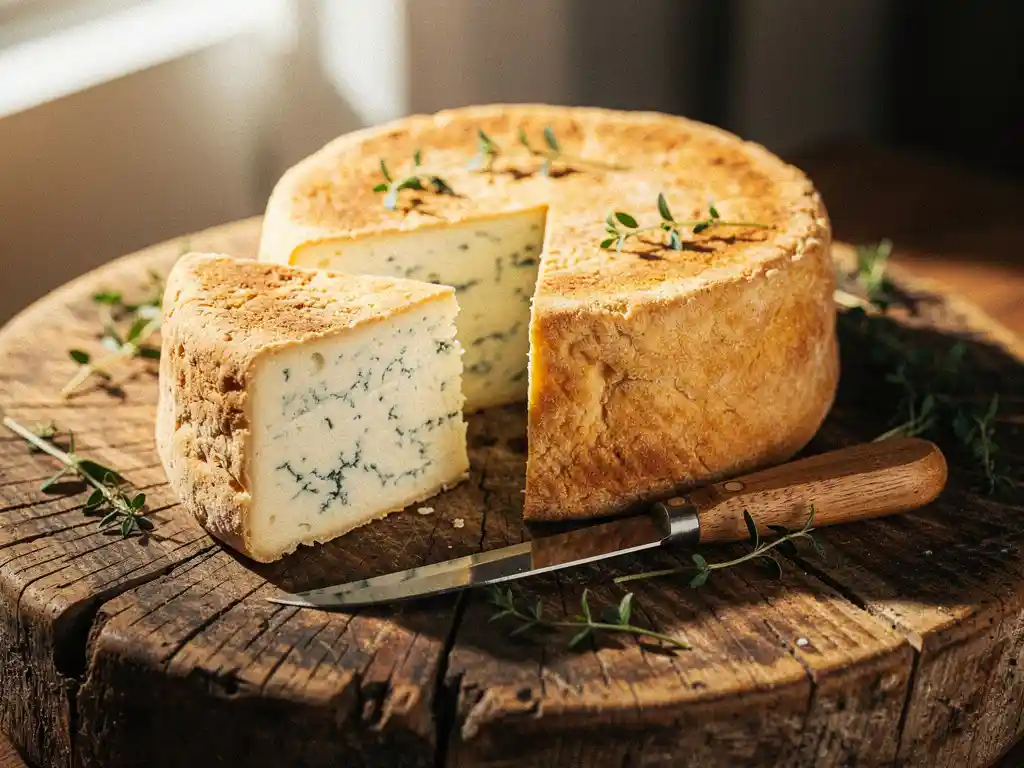
The aging process of goat cheese is a fascinating phenomenon that can drastically change the flavor, texture and functionality of cheese. For professionals in the food industry working with goat cheese as an ingredient, understanding this process is crucial for creating consistent and high-quality end products. Whether you produce pizzas, ready-made meals or other food products, the aging time of goat cheese has a direct impact on how it behaves in your production line and how the end consumer experiences the product.
What exactly is the aging process of goat cheese?
The aging process of goat cheese is a controlled fermentation where lactic acid bacteria and molds break down the proteins and fats in the cheese, resulting in changes in flavor, texture and functionality. This process takes place in special aging chambers with precisely controlled temperature and humidity, usually between 10 and 15 degrees Celsius.
During aging, goat cheese undergoes various biochemical changes. The lactic acid bacteria convert lactose into lactic acid, which lowers the pH value of the cheese. At the same time, enzymes break down the proteins (casein) into smaller peptides and amino acids, making the texture softer. In aged goat cheese with a white mold rind, such as our Alphenaer aged goat cheese log, the surface mold also plays an important role in developing the characteristic flavor profile.
The aging process begins immediately after production and can vary from a few weeks to several months, depending on the desired end result. For industrial applications, it is important to know that each aging phase produces specific properties that are suitable for different processing methods.
How does the flavor of goat cheese change during aging?
The flavor of goat cheese evolves from mild and creamy to intense and tangy as the aging process progresses. Young goat cheese has a soft, milky flavor with light citrus notes, while fully aged goat cheese develops a complex, nutty flavor with pronounced goat tones.
In the first weeks of aging, the fresh, pure flavor dominates. The characteristic goat flavor is still subtly present. As aging progresses, deeper flavor nuances develop. The enzymatic breakdown of proteins creates umami-rich compounds that provide a fuller, rounder flavor. In white mold cheeses, the mold rind contributes to mushroom-like and earthy tones.
For food producers, it is essential to understand how this flavor evolution affects the end product. A young goat cheese will add a milder, creamier flavor to a pizza, for example, without overpowering the other ingredients. An aged variant, on the other hand, adds a pronounced, characteristic flavor that can dominate the flavor profile of the end product. The choice for a specific aging stage therefore depends heavily on the desired flavor balance in the end product.
What aging stages are there for goat cheese for industrial application?
For industrial applications, we distinguish three main aging stages for goat cheese: fresh (0-2 weeks), young aged (2-7 weeks) and fully aged (7+ weeks). Each stage offers specific functional properties that determine how the cheese behaves during processing, heating and storage.
Fresh goat cheese is the most versatile for industrial processing. With a shelf life of up to 23 weeks, this stage offers maximum flexibility in production and logistics. The soft, spreadable texture makes it ideal for processing in spreads, fillings and as a topping. Our fresh goat cheese log in a 2.6 kg package is specifically developed for efficient processing in production lines.
Young aged goat cheese (2-7 weeks) develops a firmer texture while maintaining creaminess. This stage is optimal for applications where the cheese must maintain its shape but still melt well. The aged goat cheese log of 7 weeks old combines a developed flavor profile with good processing properties.
Fully aged goat cheese (7+ weeks) has the most pronounced flavor and the firmest texture. For specific industrial applications where an intense goat cheese note is desired, such as in premium ready-made meals, this stage offers the most flavor impact per gram of product used.
What is the difference between aged and fresh goat cheese in end products?
The main difference between aged and fresh goat cheese in end products lies in the flavor intensity, texture after heating and visual presentation. Fresh goat cheese melts creamy and evenly, while aged goat cheese retains its structure better and offers a more intense flavor experience.
In practical applications, these differences manifest clearly. In pizzas, for example, fresh goat cheese will completely blend with other ingredients and form a creamy base. Aged goat cheese, on the other hand, retains more of its identity, remains visible as a separate ingredient and adds texture variation. This makes aged variants ideal for premium products where the goat cheese should be a recognizable component.
For producers of ready-made meals, the choice between fresh and aged is also crucial for the shelf life of the end product. Fresh goat cheese has a higher moisture content, which can affect the texture of sauces and fillings during storage. Aged variants with a lower moisture content offer more stability in moisture-sensitive applications.
The nutritional values also differ. Aged goat cheese has a more concentrated protein content due to moisture loss during aging, which means less product is needed for the same nutritional impact. This can be cost-effective in products where protein content is an important factor.
How does aging duration affect the melting behavior of goat cheese?
The aging duration has a direct influence on the melting behavior of goat cheese by changing the protein structure and moisture content. Fresh goat cheese melts quickly and evenly due to the high moisture content, while longer aged cheese melts more slowly and retains more structure during heating.
The melting process is determined by the extent to which casein proteins have been broken down during aging. In fresh goat cheese, these proteins are still strongly connected to each other, resulting in smooth melting behavior. As aging progresses, these connections become weaker, which paradoxically leads to less smooth melting. This explains why our aged goat cheese log of 7 weeks retains its shape better when heated than the fresh variant.
For industrial applications where melting behavior is crucial, such as in pizza toppings or gratins, this knowledge is essential. Fresh goat cheese crumbles, for example, melt completely and evenly over a pizza, perfect for an even cheese layer. Aged variants, on the other hand, create interesting texture contrasts with melted and not-completely-melted parts.
Temperature resistance also varies with aging duration. Fresh goat cheese begins to soften at lower temperatures (around 40°C), while aged variants only begin to melt significantly at higher temperatures (60-70°C). This makes aged goat cheese more suitable for applications with longer preparation times or higher temperatures.
Which flavor profiles of aged goat cheese work best in which end products?
Young aged goat cheese (2-4 weeks) with its mild, creamy profile works best in delicate applications such as quiches and salads, while fully aged variants (7+ weeks) with their intense, tangy flavor excel in robust dishes such as gratins and savory tarts.
For pizza applications, the ideal choice depends on the total flavor profile. A Margherita-style pizza benefits from young aged goat cheese that works complementary with tomato and basil without dominating. For a goat cheese specialty pizza, on the other hand, where the cheese plays the main role, a 7-week aged variant delivers the desired flavor intensity that comes through the other toppings.
In ready-made meals such as lasagnas or stuffed pasta, the aging stage works as a flavor enhancer. A 4-5 week aged goat cheese offers the perfect balance: enough character to remain recognizable among other ingredients, but not so intense that it disturbs the harmony. For premium ready-meals where goat cheese should add a luxury element, fully aged cheese with its complex flavor profile is the best choice.
Specific flavor combinations also require different aging stages. Our aged goat cheese log with truffle, for example, combines the umami-rich truffle flavor with the developed cheese notes of 7 weeks aging. This synergy works excellently in meatballs, sausages or other meat products where both flavors enhance each other.
How DeJong Cheese helps optimize aged goat cheese in your end product
At DeJong Cheese, we understand like no other how crucial the right aging is for the success of your end product. With our years of expertise since 1995, we help food producers find the perfect match between aging stage and application.
Our support for industrial customers includes:
- Technical specifications per aging stage, including melting behavior and pH values
- Samples of different aging stages for your product development
- Consistent quality thanks to our IFS Food certification and strict quality controls
- Flexible packaging options from 1 kg to 15 kg for optimal processing in your production line
- Possibility of private label production according to your specific aging requirements
Our complete range from fresh to fully aged goat cheese, available in various forms such as logs, crumbles and spreads, offers the right solution for every industrial application. With a reliable supply chain and delivery certainty worldwide, we ensure that you can always count on the desired quality and aging degree.
Are you curious how our aged goat cheese specialties can improve your products? Contact our technical specialists for personal advice. Visit our foodservice page for more information about our complete range, or find one of our sales points for samples. Discover on our website how we have been supporting the food industry with high-quality goat cheese solutions for more than 25 years.
Veelgestelde vragen
How can I best guarantee the shelf life of aged goat cheese in my end product?
The shelf life of aged goat cheese in end products depends heavily on the packaging method and storage conditions. For optimal shelf life, we recommend vacuum packaging or modified atmosphere packaging (MAP) with a CO2/N2 mixture. Additionally, it is crucial to maintain the cold chain and choose aged goat cheese with a lower moisture content for products with longer shelf life, as these are less susceptible to microbial growth.
Which aging degree of goat cheese works best for frozen products?
For frozen products, we recommend young aged goat cheese of 3-5 weeks old. This has the ideal balance between flavor intensity and moisture content, ensuring the texture remains optimal after thawing. Fully aged variants can become crumbly when frozen due to their lower moisture content, while fresh goat cheese can become watery after thawing. Always test first with small batches to evaluate freezing loss and texture changes.
How do I prevent aged goat cheese from becoming bitter during the production process?
Bitterness in aged goat cheese usually occurs due to excessive proteolysis or too high heating temperatures. Avoid temperatures above 80°C with direct heating and preferably use indirect heating methods such as steam. Choose goat cheese with controlled aging where the pH value is between 4.6 and 5.2. Also, adding a small amount of citric acid or lactic acid can help neutralize unwanted bitter flavors.
Can I combine different aging stages of goat cheese in one product?
Absolutely! Combining different aging stages is an excellent strategy to create complex flavor profiles and textures. Use, for example, 70% fresh goat cheese for creaminess and meltability, combined with 30% aged variant for flavor depth. This technique works especially well in sauces, spreads and fillings where you want both good processability and a pronounced flavor.
What are the main quality indicators to check when receiving aged goat cheese?
When receiving aged goat cheese, you should pay attention to the core temperature (maximum 7°C), the integrity of the packaging, and visual characteristics such as color and mold growth. For white mold cheeses, the rind should be evenly white without yellow or green spots. The smell should be pleasant and characteristic without ammonia notes. Also always check the pH value with a penetration electrode; this should correspond to the specifications for the relevant aging stage.
How do I calculate the right dosage of aged goat cheese for a consistent flavor profile?
The dosage depends on the flavor intensity per aging stage. As a rule of thumb: fresh goat cheese requires 15-20% of the total weight for noticeable flavor, young aged (4 weeks) 10-15%, and fully aged (7+ weeks) only 5-10%. Take into account flavor enhancement by salt and other ingredients. Develop a standard flavor profile through sensory panels and adjust the dosage based on the measured flavor intensity (on a scale of 1-10) multiplied by the usage percentage.
Gerelateerde artikelen
- Hoe test je smeltgedrag van geitenkaas voorafgaand aan grootschalige inkoop?
- Wat zijn de voordelen van geitenkaas ten opzichte van koekaas in industriële pizzatoepassingen?
- Wat zijn de gevolgen van inconsistente kaaskwaliteit in een pizzaproductielijn?
- Hoe voorkom je kwaliteitsproblemen bij geitenkaas wrongel in kant-en-klaarmaaltijden?
- Hoe zorg je dat je leverancier altijd voldoet aan de laatste voedselveiligheidseisen?