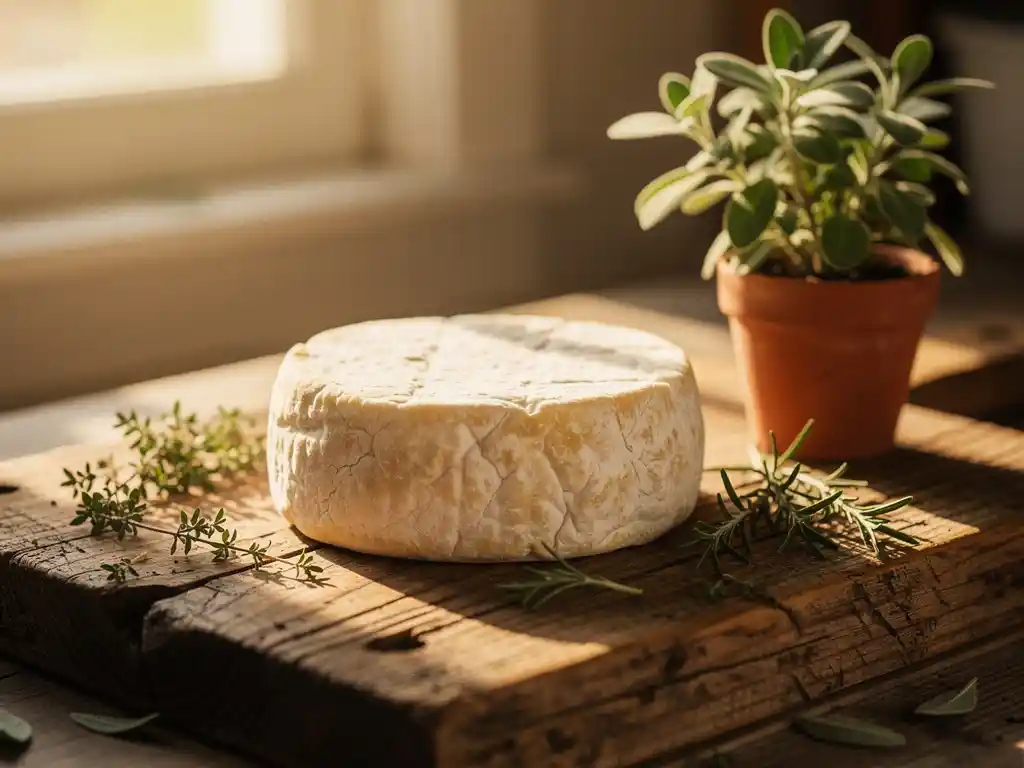
Sustainability plays an increasingly important role in the procurement of industrial ingredients, and goat cheese is no exception. For buyers in the food industry working with large volumes of goat cheese for pizzas, ready meals, or other applications, incorporating sustainability criteria becomes essential. It’s not just about meeting company objectives, but also about responding to the growing consumer demand for responsibly produced food products. In this article, we discuss concrete ways to integrate sustainability into your procurement process for industrial goat cheese.
What are sustainability criteria in goat cheese procurement?
Sustainability criteria in goat cheese procurement encompass environmental impact, animal welfare, social responsibility, and economic viability. These criteria help buyers select suppliers who contribute to a more sustainable food chain while guaranteeing consistent quality and reliable delivery.
The key sustainability criteria for industrial goat cheese are:
- Environmental impact: CO2 emissions per kilogram of product, water consumption during production, energy sources used in the cheese factory, and waste management
- Animal welfare: pasture access for goats, natural feed without unnecessary antibiotics, stable conditions that enable natural behavior
- Local sourcing: distance between milk suppliers and production location, support for local farmers
- Packaging: use of recyclable or compostable materials, minimization of packaging volume
- Transparency: traceability from milk to end product, openness about production processes
For large-scale processing in the food industry, it’s crucial that these sustainability criteria go hand in hand with technical specifications such as melting behavior, fat content, and freeze stability. A sustainable supplier must be able to guarantee both aspects.
Which certifications are important for sustainable goat cheese?
The most important certifications for sustainable goat cheese are IFS Food, FSSC 22000, organic certification, and animal welfare certifications such as Better Life. These certifications guarantee that suppliers meet strict standards for food safety, sustainability, and ethical production.
For industrial buyers, the following certifications are relevant:
- IFS Food certification: guarantees food safety and quality management according to international standards
- FSSC 22000: globally recognized certification scheme for food safety, essential for suppliers to large food producers
- EU Organic certification: ensures that at least 95% of ingredients are organically produced
- Better Life certification: Dutch standard for animal welfare with star classification
- Planet Proof: certification demonstrating more sustainable production in terms of climate, biodiversity, and soil
In addition to these general certifications, specific industry initiatives may be relevant. The DGZK (Sustainable Goat Farming and Dairy Chain) certification, for example, specifically focuses on the goat dairy sector and combines aspects of animal welfare, environment, and economic sustainability.
When evaluating certifications, it’s important to look beyond just the logo. Ask suppliers about the scope of their certification, when the last audit took place, and what specific improvements they have implemented to meet the standards.
How do you measure the carbon footprint of industrial goat cheese?
You measure the carbon footprint of industrial goat cheese by calculating all greenhouse gas emissions in the production chain, from feed production to delivery at the factory. This usually results in 8-12 kg CO2-equivalent per kilogram of goat cheese, depending on production method and transport.
A complete carbon footprint calculation includes these components:
- Feed production: emissions from cultivation, transport, and processing of goat feed (30-40% of total)
- Milk production on the farm: methane emissions from goats, energy consumption in stables (25-35%)
- Milk transport: fuel consumption for milk collection (5-10%)
- Cheese production: energy consumption for pasteurization, curd preparation, aging (15-25%)
- Packaging: production of packaging material, especially with Modified Atmosphere Packaging (5-10%)
- Distribution: transport to processing location, including refrigerated transport (5-15%)
For industrial processors, it’s relevant to ask suppliers about their Product Carbon Footprint (PCF) calculations. Modern cheese producers often use Life Cycle Assessment (LCA) methodologies according to ISO 14040/14044 standards. Pay particular attention to whether the calculation is cradle-to-gate (to factory gate) or cradle-to-customer (including transport to your location).
Practical reduction opportunities you can discuss with suppliers include: use of renewable energy in the cheese factory, optimization of transport routes, and innovative packaging solutions that reduce weight and volume without compromising shelf life.
What is the difference between local and international sustainability in goat cheese?
The difference between local and international sustainability in goat cheese lies in the trade-off between transport emissions and production efficiency. Local goat cheese has lower transport emissions but may be less efficiently produced, while international suppliers often have economies of scale but higher logistical impact.
With local sustainability (production within 150 km), we see these characteristics:
- Shorter transport distances: 50-80% lower transport emissions
- Direct relationships with dairy farmers: better control over animal welfare and feed quality
- Seasonal production: more natural production cycle but possibly varying availability
- Smaller-scale production: often higher costs per unit but more flexibility
International sustainability is characterized by:
- Economies of scale: more efficient production can reduce total CO2 per kg
- Standardized processes: more consistent quality and specifications for industrial processing
- Advanced technology: investments in sustainable production techniques
- More complex certification: often multiple international standards
For industrial buyers, the optimal choice is context-dependent. A Dutch cheese producer that supplies processing companies in the Benelux often combines the best of both worlds: regional milk supply with professional production capacity. It’s essential to evaluate the total sustainability impact, not just the transport component.
How do you integrate sustainability criteria into your procurement process?
Integrate sustainability criteria into your procurement process by including them in tender documents, using weighted scoring models, and structurally monitoring sustainability performance. Start with 20-30% weighting for sustainability alongside price, quality, and delivery reliability.
An effective step-by-step plan for integration:
- Define measurable criteria: CO2 emissions per kg, percentage of renewable energy, animal welfare score
- Develop a scorecard: weigh sustainability for at least 20% in the total supplier assessment
- Request documentation: certificates, sustainability reports, CO2 calculations
- Set realistic goals: for example, 15% CO2 reduction in 3 years for your goat cheese procurement
- Monitor progress: quarterly reports on sustainability performance
For industrial goat cheese specifically, you can apply these criteria:
- Energy consumption per ton of produced curd or cream cheese
- Percentage of milk from farms with pasture access
- Water consumption and wastewater treatment in production
- Innovations in packaging for bulk deliveries (buckets, MAP packaging)
It’s important not to view sustainability as a standalone criterion, but to integrate it with your existing quality and delivery requirements. A supplier that delivers freeze-stable goat cheese in efficient bulk packaging, for example, combines functionality with sustainability.
What questions do you ask suppliers about sustainability?
Ask suppliers concrete questions about their carbon footprint, energy sources, animal welfare policy, packaging strategy, and sustainability goals. Ask for measurable data, certifications, and improvement plans to prevent greenwashing and identify genuine sustainability performance.
Essential questions for suppliers of industrial goat cheese:
Environment and climate
- What is the carbon footprint per kilogram of your goat cheese products?
- What percentage of your energy consumption comes from renewable sources?
- How do you minimize water consumption in the production process?
- What measures do you take to reduce food waste?
Animal welfare and origin
- Do the goats have access to pasture and if so, how many days per year?
- What is the average distance between milk suppliers and your production location?
- What feeding protocol do your milk suppliers follow?
- How do you ensure antibiotic-free milk production?
Packaging and logistics
- What sustainable alternatives do you offer for traditional plastic packaging?
- Can your MAP packaging or buckets be recycled?
- How do you optimize transport efficiency for bulk deliveries?
Transparency and improvement
- Can you share a sustainability report or LCA of your products?
- What concrete sustainability goals do you have for the next 5 years?
- How do you measure and report progress on sustainability?
Always ask for substantiation with data and certificates. A reliable supplier can provide this information directly and is transparent about both successes and challenges in their sustainability journey.
How DeJong Cheese helps with sustainable goat cheese procurement
As a traditional family business since 1995, we at DeJong Cheese understand the balance between artisanal quality and modern sustainability requirements. Our approach combines local milk supply with efficient production processes, specifically tailored to the needs of industrial processors.
Our sustainability approach for industrial customers:
- Local milk supply: We work with selected goat farmers from the region, keeping transport distances minimal
- Efficient bulk packaging: Our industrial curd and cream cheese are delivered in optimized packaging that minimizes food waste
- Transparent production processes: From milk receipt to end product, we offer complete traceability
- Flexible solutions: Customizable recipes and packaging sizes that align with your sustainability goals
For industrial processors who want to integrate sustainability without compromising on quality or delivery reliability, we offer concrete support. Whether it’s freeze-stable goat cheese for pizza applications or pumpable curd for large-scale production, we think along about sustainable solutions that fit your production process.
Would you like to know more about how our goat cheese products for industry contribute to your sustainability goals? Contact us for a personal conversation about your specific needs. Also visit our website for more information about our complete range, or visit one of our sales points to experience our products.
Veelgestelde vragen
How can I as a buyer objectively compare the sustainability performance of different goat cheese suppliers?
Develop a standardized scorecard with weighted criteria such as CO2 emissions per kg (30%), certifications (25%), animal welfare (25%) and packaging innovation (20%). Ask all suppliers for the same data and use a scoring system from 1-10 per criterion. This creates an objective comparison basis that fits your business priorities and enables data-driven choices.
What are the biggest challenges in implementing sustainability criteria without significantly increasing costs?
The biggest challenges are balancing higher initial costs with long-term savings, convincing internal stakeholders, and finding suppliers that combine sustainability and scale. Start with quick wins like packaging optimization and transport efficiency, which often save costs directly. Phase in further sustainability requirements over 2-3 years and negotiate volume agreements to limit additional costs.
How do I prevent greenwashing by suppliers who claim to produce sustainably?
Always ask for concrete evidence: certified CO2 calculations, energy audit reports, and third-party certifications with audit reports. Conduct unannounced supplier visits and check whether sustainability claims match practice. Watch out for vague terms without measurable substantiation and be critical of suppliers who don’t provide transparency about their improvement points or challenges.
Which technological innovations in goat cheese production contribute most to sustainability?
The most impactful innovations are membrane filtration for water reuse (30-50% water savings), heat recovery systems in pasteurization (20-30% energy savings), and precision fermentation technology for more consistent curd production with less waste. For packaging, vacuum forming machines with thin-walled materials and Modified Atmosphere techniques with recycled gas mixtures make a significant difference in total environmental impact.
How can I include sustainability requirements in contracts without jeopardizing supply security?
Implement sustainability requirements in phases with realistic timelines and build in flexibility for force majeure situations. Include key performance indicators (KPIs) with quarterly reviews instead of hard contractual penalties. Work with improvement targets (for example 5% CO2 reduction per year) instead of absolute requirements. Consider long-term contracts (3-5 years) that provide suppliers with certainty to invest in sustainability improvements.
What are practical first steps to start with more sustainable goat cheese procurement tomorrow?
Start immediately by inventorying the current carbon footprint of your goat cheese suppliers and set this as baseline. Schedule a conversation with your top 3 suppliers about their sustainability plans and ask for certificates. Integrate at least one sustainability criterion in your next tender. Start small with for example packaging optimization or transport bundling – these quick wins show immediate results and create support for further steps.
Gerelateerde artikelen
- Wat zijn de mogelijkheden van geitenkaas brie en camembert in premium retailconcepten?
- Wat zijn de gevolgen van een mislukte audit bij een kaasleverancier?
- Wat zijn de mogelijkheden van private label geitenkaasconcepten voor retailpartners?
- Hoe gebruik je vijgen- of truffelgeitenkaas als premium ingredient in een kant-en-klaarproduct?
- Hoe stroomlijn je het goedkeuringsproces van een nieuwe kaassoort intern?