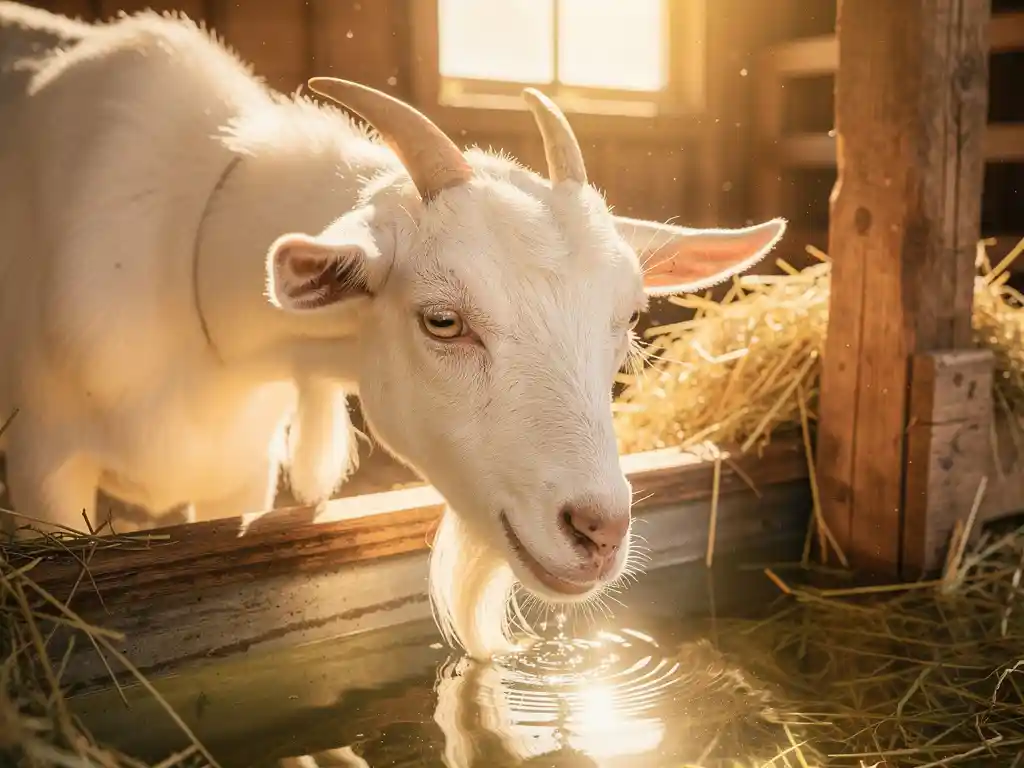
The quality of goat milk forms the foundation for every high-quality goat cheese. For producers in the food industry, it is essential to understand how various factors on the goat farm influence milk consistency. Animal welfare plays a crucial role in this process that is often underestimated. From fresh goat cheese to aged specialties – milk quality ultimately determines whether the final product meets strict industrial specifications.
What is the relationship between animal welfare and milk quality in goats?
Animal welfare has a direct impact on milk quality because healthy, stress-free goats produce more consistent milk with stable fat and protein content. Goats with optimal welfare produce milk with predictable properties that are essential for reliable cheese production.
Goat welfare influences various aspects of milk composition. When goats live in a comfortable environment with adequate space for movement, clean drinking water, and quality feed, they produce milk with higher levels of beneficial fatty acids and proteins. These components are crucial for the coagulation process during cheese production.
Furthermore, good animal welfare ensures a lower somatic cell count in the milk. This means fewer inflammatory reactions in the udder, resulting in milk that is better suited for processing into premium cheese products. For industrial applications such as goat cheese spread or crumbles, this consistency is indispensable for achieving the desired texture and shelf life.
Which aspects of animal welfare have the greatest impact on milk consistency?
Nutrition, housing, and milking routine are the three most important welfare aspects that influence milk consistency. A balanced ration ensures stable fat and protein percentages, while comfortable housing minimizes stress and consistent milking routines support natural lactation.
Goat nutrition must be precisely tailored to their lactation stage. A deficiency in essential nutrients such as selenium, vitamin E, or zinc directly leads to varying milk composition. Goats need a minimum of 3-4 kg of dry matter daily, of which approximately 16-18% should be crude protein for optimal milk production.
Housing factors such as barn climate, lying comfort, and group composition determine the stress level of the herd. Goats need a minimum of 1.5 square meters of barn space per animal and must be able to lie on a dry, soft surface. Overcrowding leads to competition for feed and lying areas, resulting in varying milk quality between individual animals.
A fixed milking routine with regular times and calm handling prevents stress hormones that disrupt milk composition. Milking times that vary by more than 30 minutes can lead to fluctuations in fat content of up to 0.5 percentage points.
How does stress in goats affect the composition of their milk?
Stress causes the release of cortisol and adrenaline, hormones that directly interfere with milk production and composition. These stress hormones reduce fat content by 10-15% and disrupt protein structure, leading to diminished coagulation properties for cheese production.
Acute stress factors such as transport, veterinary treatments, or sudden changes in herd composition have immediate effects on milk. Fat content can drop within hours, while lactose content actually rises as a compensation mechanism. These shifts make the milk unsuitable for consistent processing into specialty cheeses.
Chronic stress from factors such as poor ventilation, continuous social conflicts, or inadequate nutrition has even more profound consequences. Milk production can decrease by 20-30%, while the number of somatic cells increases. This elevated cell count affects enzymatic activity in the milk, causing problems during cheese aging.
Stress-related changes in milk are measurable up to 72 hours after the stressful event. For industrial processors, this means that milk from stressed goats can lead to batch variations in end products such as goat cheese spread or fresh goat cheese portions.
What are the measurable differences in milk between goats with high and low welfare?
Goats with high welfare produce milk with 3.8-4.2% fat and 3.2-3.4% protein, while goats with low welfare often show fluctuations of 3.0-3.8% fat and 2.8-3.2% protein. The cell count with high welfare stays below 750,000 cells/ml versus often above 1,500,000 with low welfare.
The differences also manifest in mineral composition. Milk from goats with optimal welfare contains higher concentrations of calcium (1,300-1,400 mg/l) and phosphorus (900-1,000 mg/l), essential for good coagulation during cheese production. With reduced welfare, these values drop by 10-15%, making cheese production more difficult.
The pH value of fresh milk also varies significantly. Healthy, content goats produce milk with a stable pH of 6.5-6.7, ideal for further processing. Stressed or sick goats can produce milk with pH values between 6.3-6.9, disrupting the predictability of the production process.
Microbiologically speaking, milk from goats with high welfare contains lower numbers of undesirable bacteria. The total bacterial count usually remains below 50,000 cfu/ml, while with reduced welfare it can rise above 200,000 cfu/ml. These differences have direct impact on the shelf life and safety of end products.
How can goat farmers optimize welfare for consistent milk quality?
Goat farmers can optimize welfare by following a structured management protocol that focuses on five core areas: nutrition, housing, health, behavior, and milking routine. Implementation of daily welfare checks and monthly milk quality analyses ensures timely adjustments and consistent results.
Optimal feed management begins with ration calculation based on lactation stage and production level. Provide high-quality roughage supplemented with concentrate containing 16-18% crude protein. Ensure constantly available fresh water – a lactating goat drinks 8-12 liters per day. Avoid sudden feed changes by gradually introducing new components over 7-10 days.
For housing, each goat needs a minimum of 1.5 m² barn space and 35 cm feeding rail space. Install comfortable lying boxes with rubber mats or thick bedding layers. Ensure adequate ventilation without drafts – ideal is 4-6 air changes per hour. Group goats based on age and production level to minimize social stress.
Develop fixed daily routines for feeding, milking, and care. Milk at fixed times with a maximum of 12 hours between milking sessions. Train staff in calm, consistent handling of animals. Implement a health protocol with preventive hoof trimming every 3 months and parasite control according to schedule.
Why is consistent milk quality crucial for cheese production?
Consistent milk quality is crucial because variations in fat, protein, and mineral content directly lead to unpredictable coagulation times, varying cheese yield, and inconsistent texture. For industrial cheese producers, fluctuations in milk quality mean production losses, quality problems, and possible rejection of complete batches.
The cheese-making process is a complex interplay of enzymatic and microbiological processes that work optimally within narrow parameters. A variation of just 0.2% in protein content can extend or shorten coagulation time by 5-10 minutes. This disrupts production schedules and can lead to over- or underdeveloped curd.
For specific products such as goat cheese spread or crumbles, tolerances are even narrower. These products require an exact fat content for proper spreadability or crumbliness. Fluctuations of more than 0.3% in fat content make it impossible to guarantee consistent product specifications.
The economic impact is considerable. Inconsistent milk quality can lead to 10-15% lower cheese yield per liter of milk. For industrial processors working with large volumes, this means substantial financial losses. Additionally, quality fluctuations can lead to complaints, returns, and loss of confidence among customers in the food industry.
How DeJong Cheese helps with consistent milk quality for your cheese production
As a traditional family business since 1995, we at DeJong Cheese understand the importance of consistent milk quality for reliable cheese production. Our years of expertise in processing goat milk into high-quality cheese specialties enables us to support industrial partners with:
- Guaranteed product consistency: Our strict quality controls and collaboration with selected goat farmers ensure stable specifications in all our products
- Flexible delivery options: From fresh goat cheese spread (10kg buckets) to frozen crumbles with 2-year shelf life – we deliver according to your production schedule
- Technical support: Our team is happy to share knowledge about optimal processing conditions and application possibilities of our goat cheese products
- Volume security: With our modern production facility in Alphen, we can deliver large volumes with consistent quality
For buyers in the food industry looking for a reliable partner for goat cheese products with guaranteed consistency, we gladly offer a customized solution. Discover our complete range of industrial cheese products or contact our specialists directly for technical specifications and delivery options. Also visit our homepage for more information about our tradition and working methods, or find one of our sales points in your region.
Veelgestelde vragen
How can I as a buyer monitor the consistency of goat cheese products during storage?
Monitor temperature (2-6°C for fresh products), humidity (85-90% for aged cheeses) and pH value upon receipt. Perform random texture analyses and check for deviations in color or odor. Document all measurements for traceability and communicate deviations directly with your supplier for quick adjustment.
What are the key quality indicators I should look for when purchasing industrial goat cheese?
Look for certifications (BRC, IFS), microbiological values (E.coli <100 cfu/g, Listeria absent), consistent fat/protein ratio (±0.2% deviation) and functional properties such as melting behavior. Ask about traceability to milk supplier and check if the producer works with fixed goat farmers for guaranteed consistency.
How do I prevent quality loss of goat cheese products in my own production process?
Implement FIFO principle, avoid temperature fluctuations during handling and process products within 24 hours after thawing. Use clean, stainless steel equipment and prevent cross-contamination with cow milk products. Train staff in the specific properties of goat cheese, which is more sensitive to oxidation than cow milk cheese.
What shelf life guarantees can I expect for different goat cheese products?
Fresh goat cheese spread keeps 3-4 months refrigerated, frozen crumbles up to 24 months at -18°C, and aged goat cheeses 6-12 months depending on aging degree. After opening/thawing, maximum 5-7 days shelf life applies. Ask your supplier for specific best-before guarantees and optimal storage conditions per product type.
How do I calculate the right purchase quantities of goat cheese for seasonal fluctuations?
Analyze historical sales data and account for 20-30% higher demand in December-January and Easter period. Goat cheese consumption also peaks during BBQ season (May-August). Consider longer shelf life products like frozen crumbles for flexible inventory planning and reduce waste through smaller, more frequent orders during low periods.
What are common application errors when processing goat cheese in industrial recipes?
Avoid heating above 65°C to prevent texture loss, use 10-15% less goat cheese than cow milk cheese due to more intense flavor, and compensate for the lower melting point with adjusted process temperatures. Goat cheese has different emulsifying properties – always test small batches with new applications and adjust pH if necessary with citric acid.
How can I verify sustainability and animal welfare with my goat cheese supplier?
Ask for KwaliGeit certification (Dutch quality assurance), CO2 footprint reports and animal welfare audits. Check if the supplier is transparent about milk origin, antibiotic use and feed composition. If possible, visit the production location and milk suppliers for your own verification of sustainability claims.
Gerelateerde artikelen
- Wat zegt een fabrieksaudit over de betrouwbaarheid van een kaasproducent?
- Wat zijn de minimale afnamehoeveelheden bij industriële geitenkaas pucks?
- Welke referenties vraag je op bij een producent van industriële geitenkaas?
- Wat zijn de gevolgen van inconsistente kaaskwaliteit in een pizzaproductielijn?
- Hoe gebruik je geitenkaas spread als ingrediënt in industriële sauzen en dressings?