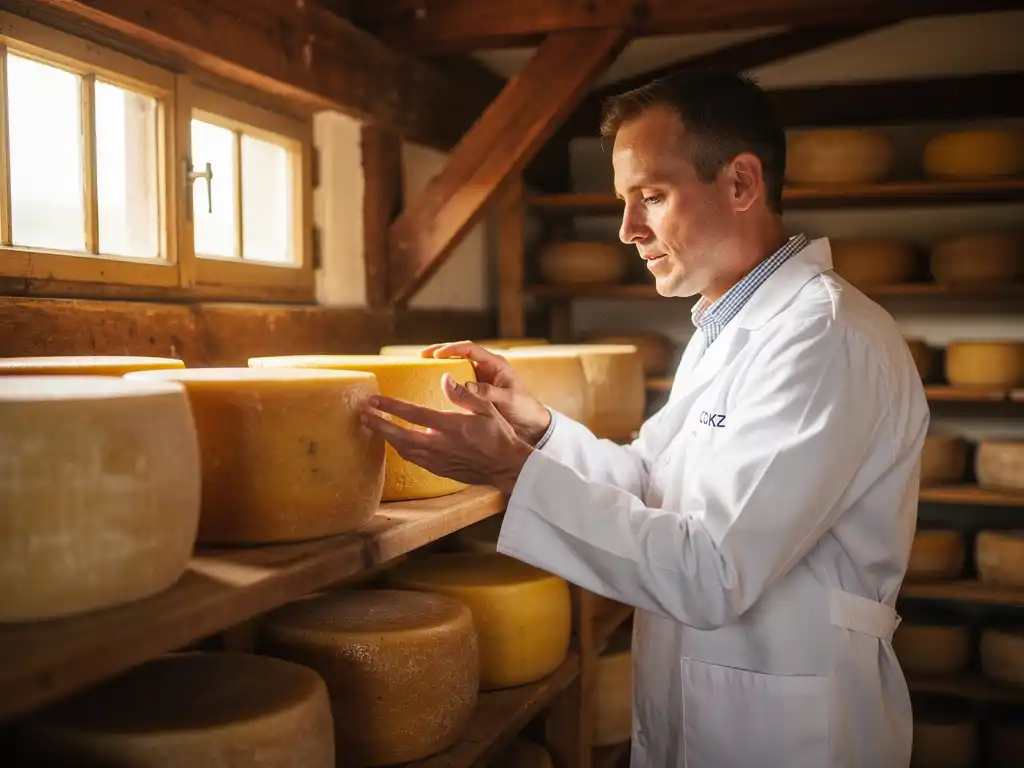
For buyers in the food industry, finding reliable cheese producers is a crucial part of their work. COKZ supervision plays an important role here as an independent guarantee for quality and food safety. This supervision system provides assurance about production processes, hygiene and compliance with legal requirements at Dutch dairy companies. In this article we answer the most important questions about COKZ supervision and what this means for the reliability of cheese producers.
What is COKZ supervision and why is it important for cheese producers?
COKZ supervision is the independent control system of the Central Organization for Quality Affairs in Dairy that oversees compliance with Dutch and European dairy legislation. This supervisory body checks whether cheese producers comply with strict requirements for hygiene, composition, production and labeling of dairy products.
The importance of COKZ supervision for cheese producers lies in multiple aspects. First, it guarantees access to both Dutch and international markets, because the certificate is recognized worldwide as proof of high-quality production standards. For traditional family businesses in cheese production, such as those active in the sector since 1995, COKZ supervision forms the basis for their reputation and market position.
The supervision includes regular inspections of production locations, laboratory analyses of products and controls on the complete production chain, from milk receipt to end product. This systematic supervision ensures that consumers and professional customers can trust the constant quality and safety of Dutch cheese products, regardless of whether it concerns fresh goat cheese, aged specialties or industrial applications such as spreadable goat cheese for foodservice.
For buyers in the food industry, COKZ supervision means significant risk reduction. It reduces the need for extensive quality controls of their own and provides assurance about the consistency of delivered products, which is essential for large-scale production processes where reliability and predictability are crucial.
How does the COKZ control system work at cheese producers?
The COKZ control system works through a combination of announced and unannounced inspections, product analyses and document controls, where all aspects of cheese production are assessed. Inspectors check production locations at least four times per year, take samples for laboratory research and verify whether all processes comply with applicable standards.
The controls begin at milk receipt, where the quality and origin of raw materials are verified. Each batch of milk must be traceable to the supplier, and temperature, pH value and microbiological condition are checked. For specialist products such as goat cheese slices or aged goat cheese, additional specific control points apply that guarantee the unique properties of these products.
During the production process, COKZ inspectors check the hygiene of equipment and personnel, correct application of recipes and compliance with time-temperature combinations. They also verify whether documentation is kept correctly, including production logs, temperature recordings and cleaning schedules. This systematic approach ensures that every product, from fresh goat cheese to goat cheese balls for industrial processing, meets the same high standards.
Laboratory research includes microbiological analyses, composition determinations and controls for unwanted substances. Samples are taken both during production and from end products. Results are compared with legal standards and product specifications. In case of deviations, corrective measures and re-controls follow to guarantee quality.
Which aspects of reliability does COKZ supervision guarantee?
COKZ supervision guarantees reliability in five core areas: product safety, consistent quality, correct labeling, traceability and compliance with legal requirements. These guarantees provide buyers with assurance that products meet all requirements for safe processing in their production processes.
In the area of product safety, COKZ supervision ensures that all cheese products are free from pathogenic microorganisms and harmful substances. This happens through strict controls on critical control points (CCPs) in the production process, regular microbiological analyses and verification of cleaning and disinfection procedures. For products such as goat cheese slices that are often consumed raw, these safety guarantees are extra important.
Consistent quality is guaranteed through supervision of standardized production processes and recipes. COKZ checks whether producers have their processes under control and consistently deliver products with declared specifications. This is crucial for industrial customers who depend on predictable product properties such as melting behavior, fat content and functionality in their own production processes.
Traceability forms an essential part of the supervision system. Every product batch must be fully traceable from raw material to end product. COKZ verifies whether companies have adequate systems for maintaining production data, batch numbers and distribution information. This traceability enables quick action in case of quality issues and protects both producers and customers against risks.
What is the difference between COKZ supervision and other quality certifications?
COKZ supervision is legally required for Dutch dairy companies and focuses specifically on compliance with dairy legislation, while other certifications such as IFS Food or BRC are voluntary and cover broader quality management systems. COKZ functions as a government supervisor with legal authority, where private certifications represent commercial standards.
The main distinction lies in scope and authority. COKZ supervision is a legal requirement specifically developed for the Dutch dairy sector and directly linked to the authority to produce and trade dairy products. Without COKZ approval, a company simply cannot produce or sell cheese in the Netherlands. Private certifications, on the other hand, are additional systems often required by retailers or international markets.
COKZ focuses primarily on product safety, composition and labeling according to legal standards. Controls are very detailed for dairy-specific aspects such as correct use of protected designations, accurate declaration of fat contents and compliance with microbiological criteria. For specialist products such as fresh goat cheese or aged goat cheese, there are specific COKZ protocols that guarantee authenticity and quality.
Private certifications such as IFS Food have a broader scope and include aspects such as management systems, HACCP implementation, personnel management and continuous improvement. These systems are often required for delivery to large retailers or for export to certain markets. Many cheese producers therefore combine COKZ supervision with one or more private certifications to meet all market requirements.
How can buyers verify COKZ compliance of a cheese producer?
Buyers can verify COKZ compliance by requesting the valid COKZ recognition number, checking the COKZ database for current status and asking for recent inspection reports. Every recognized producer has a unique registration number that confirms their compliance and can be verified online.
The most direct verification method is checking the COKZ recognition number on product packaging and documents. This number must always be visible on Dutch dairy products and consists of a specific code that identifies the producer. For professional buyers working with bulk or industrial products such as spreadable goat cheese in large packaging, this number is also listed on delivery documents and invoices.
COKZ maintains a public database where the current status of all recognized companies can be consulted. Buyers can verify here whether a producer is actively recognized, when the last inspection took place and whether any restrictions apply. This transparency makes it possible to quickly assess the reliability of potential suppliers without extensive own audits.
For more in-depth verification, buyers can ask for summaries of recent COKZ inspections and any corrective measures that have been taken. Reliable producers are transparent about their COKZ performance and can demonstrate that they consistently meet all requirements. This is especially important for buyers considering long-term supply contracts for products such as goat cheese balls or other specialties for industrial processing.
How De Jong Cheese helps with COKZ compliance and reliable cheese delivery
As a traditional family business since 1995, De Jong Cheese has extensive experience with COKZ supervision and other quality systems. We understand that buyers like Marco Visser seek assurance about consistent quality and reliable delivery. Our COKZ supervision guarantees that all our products, from fresh goat cheese to industrial applications, meet the highest standards.
Our approach for reliable partnerships includes:
- Full COKZ certification with excellent inspection results
- Transparent communication about our quality systems and performance
- Consistent product specifications thanks to standardized production processes
- Extensive documentation and traceability for every batch
- Flexibility in packaging sizes and delivery forms for industrial processing
- Dedicated account management for direct communication and problem solving
For industrial customers, we offer specific support in integrating our goat cheese products into production processes. Whether it concerns spreadable goat cheese for ready-to-eat applications, goat cheese slices for pizza production or aged goat cheese for premium products – we deliver with the assurance of COKZ supervision and additional quality guarantees.
Are you looking for a reliable cheese producer with proven COKZ compliance? Contact us for more information about our certifications, product specifications and delivery possibilities. Also visit our sales points to experience our products or view our complete range on our website.
Veelgestelde vragen
How often must a cheese producer with COKZ supervision be audited for other certifications such as IFS or BRC?
Cheese producers with COKZ supervision typically must be audited annually for IFS or BRC certification, with interim controls if necessary. The existing COKZ supervision can accelerate the audit process because many basic elements such as traceability and hygiene are already documented. Some auditors accept COKZ reports as support for specific requirements, which can reduce audit time and costs.
What are the first steps to evaluate a new supplier with COKZ certification?
Start by verifying the COKZ number in the online database and request the last three inspection reports. Then plan a supplier visit where you observe production processes and discuss specific requirements such as batch sizes, delivery times and quality specifications. Also ask for references from other industrial customers and test small batches before concluding large-scale contracts.
What documentation should I receive as standard with each delivery from a COKZ-certified producer?
Each delivery should include at minimum a delivery note with COKZ recognition number, batch number, production date, best-before date and product specifications such as fat content and pH value. For industrial processing you should also receive an analysis certificate with microbiological results and a conformity declaration. Keep these documents for at least two years for traceability purposes and potential claims.
How do I handle quality deviations despite COKZ supervision?
Document the deviation immediately with photos and samples, note batch and product numbers and contact your supplier within 24 hours. COKZ-certified producers have mandatory complaint procedures and must respond within 48 hours with a root cause analysis. Also report significant safety risks to COKZ itself through their reporting point, they can perform additional inspections and enforce corrective measures.
Can I as a buyer request specific COKZ controls for my products?
While you cannot request direct COKZ controls, you can have additional private audits performed that are complementary to COKZ supervision. Many producers also offer the possibility to be present as an observer during regular COKZ inspections. For specific product requirements you can contractually establish that the supplier performs extra analyses on top of standard COKZ requirements.
What are typical pitfalls when working with new cheese producers, even with COKZ certification?
Many buyers underestimate the impact of seasonal variations in milk quality on end products, especially with goat cheese where this has a stronger effect than with cow’s milk cheese. Other pitfalls are not testing products in your specific production process, unclear communication about functionality requirements such as melting behavior, and not establishing minimum stock levels for continuity. Discuss these points explicitly during supplier evaluation.
Gerelateerde artikelen
- Hoe stel je een leveranciersbeoordelingsformulier op voor geitenkaas?
- Wat zijn de kosten van een leverancierswissel bij industriële geitenkaas wrongel?
- Welke documentatie moet een kaasleverancier direct kunnen aanleveren?
- How do you streamline the internal approval process for a new cheese variety?
- What questions do you ask about delivery capacity when dealing with a high-melt goat cheese producer?